On the Quiet Elegance of Milan
On growing up in Milan, learning to appreciate its understated beauty, and discovering the elegance hidden behind the city's façades.
I think there are certain cities people fall in love with immediately. People admire Rome for its grandeur and history. Venice feels cinematic almost instantly. Florence presents its beauty openly, with Renaissance architecture, museums, and postcard-like streets that make admiration feel effortless. Milan is different. It is not a city that reveals itself all at once, and I think this is precisely why so many people misunderstand it. Over the past few years, I have seen countless social media videos claiming that there is nothing to do in Milan beyond visiting the Duomo. Those comments always frustrate me slightly because they miss what makes the city interesting in the first place.
Growing up in Milan, I never fully appreciated it. For most of my life, I viewed it simply as the city where I was raised: busy, gray during winter, fast-paced, and often associated more with work and routine than beauty. Compared to other Italian cities, Milan can initially feel colder and more industrial, and people tend to be a little bit less open than in other Italian cities. It lacks the immediate romanticism people often search for when they imagine Italy, with the only exception of Lake Como a couple of hours away. Tourists arrive expecting ancient ruins, dramatic piazzas, or the slower rhythms of southern Italy, and instead encounter business districts, trams, office buildings, and people constantly moving from one place to another.
Only after living abroad and repeatedly returning did I begin to understand Milan differently. Distance changed the way I looked at the city. I think part of it was living in the United States for so many years. Every time I returned, or showed the city to friends visiting from the U.S., I started noticing details I had ignored for years: the elegance of old apartment entrances, hidden courtyards behind large wooden doors, historic cafés, quiet streets in Brera after dinner, the yellow trams moving through the city at night, and the way design seems integrated into everyday life. Milan slowly became beautiful to me in a way I had never fully understood while growing up there. I began to notice a level of elegance, refinement, and attention to detail that I had previously taken for granted.
I think Milan is one of the few cities where beauty often exists behind façades rather than on the surface. Some of its most extraordinary spaces are almost invisible from the street. Behind restrained exteriors are private gardens, historic courtyards, old villas, art spaces, libraries, cafés, galleries, and interiors that feel carefully composed without appearing excessive. This hidden quality is part of what makes Milan unique. The city rewards curiosity and observation more than spectacle.
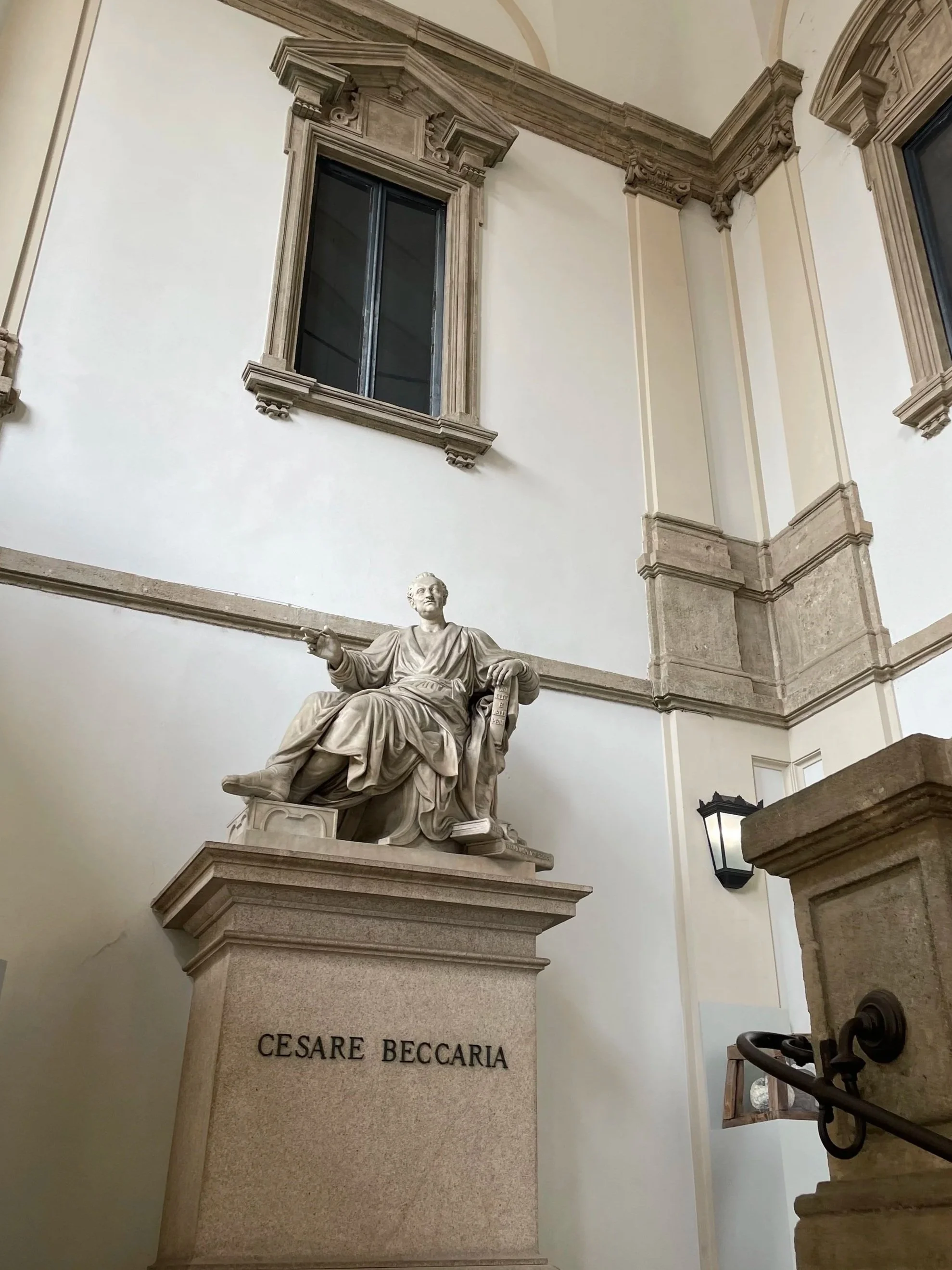
Accademia di Brera, Milan
Over time, I realized that Milan’s elegance is deeply connected to restraint. Unlike cities that perform beauty openly, Milan often feels more discreet and interior. Even Milanese fashion reflects this attitude. People outside Italy often imagine Milan only through Fashion Week, luxury brands, and runway culture, but everyday elegance in the city is usually much quieter than that. Good tailoring, quality fabrics, beautiful coats, carefully chosen shoes, neutral colors, thoughtful details, and understated silhouettes often matter more than obvious displays of wealth or trends. The elegance feels lived-in rather than theatrical.
Living in San Francisco for the past several years has made me notice this even more every time I return. Milan feels deeply aesthetic in ways that go beyond fashion alone. Design culture shapes the city itself. It appears in restaurants, bookstores, furniture stores, architecture, cafés, apartment interiors, galleries, hotels, and even in the smallest everyday objects. There is a strong awareness of proportion, materials, lighting, and atmosphere that becomes visible once you begin paying attention to it.
Brera is probably the neighbourhood that best represents this version of Milan for me. My family and I almost always return there for dinner when I am back in the city, and over time Brera became deeply connected in my mind to the atmosphere I now associate with Milanese elegance itself. Brera moves at a slower rhythm than many parts of the city. Because of my interests in art, architecture, interiors, and fashion, Brera helped me understand Milan more deeply. The city’s beauty is rarely immediate. It exists in details: the proportions of a building, the atmosphere of an old bookstore or the interior of a café. Milan taught me that beauty does not always need to announce itself loudly in order to exist.
The aperitivo culture captures this spirit particularly well. More than a drink, it is a ritual that shapes the rhythm of the evening. People gather after work, sit outside for hours, and allow conversations to unfold naturally. There is a quiet elegance in this routine that feels distinctly Milanese. In Milan, aesthetics feel woven into everyday life. Historic spaces like Villa Necchi Campiglio and Palazzo Litta reflect a city shaped by architecture, design, and artistic culture. Beauty is not treated as something separate from daily life, but as part of it.
Milan became more beautiful to me precisely because it was not immediate. It required time, distance, and maturity to understand it fully. The city taught me to appreciate quieter forms of elegance: restraint over spectacle, atmosphere over obvious beauty, and details over excess. It is not a city of instant romance. It is a city that slowly teaches you how to see.
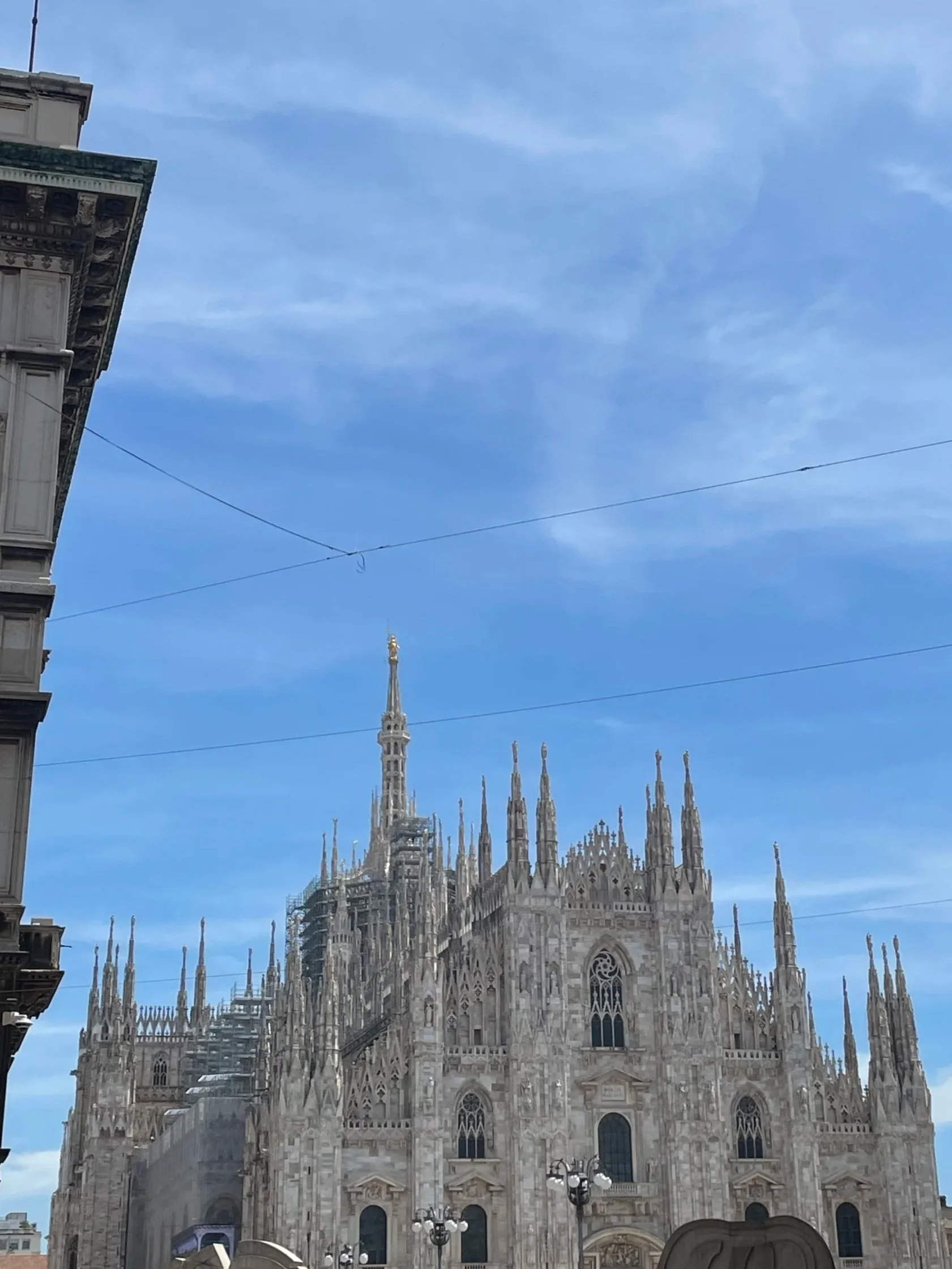
Duomo di Milano, Milan.