Light and Repetition at Museo Cabañas
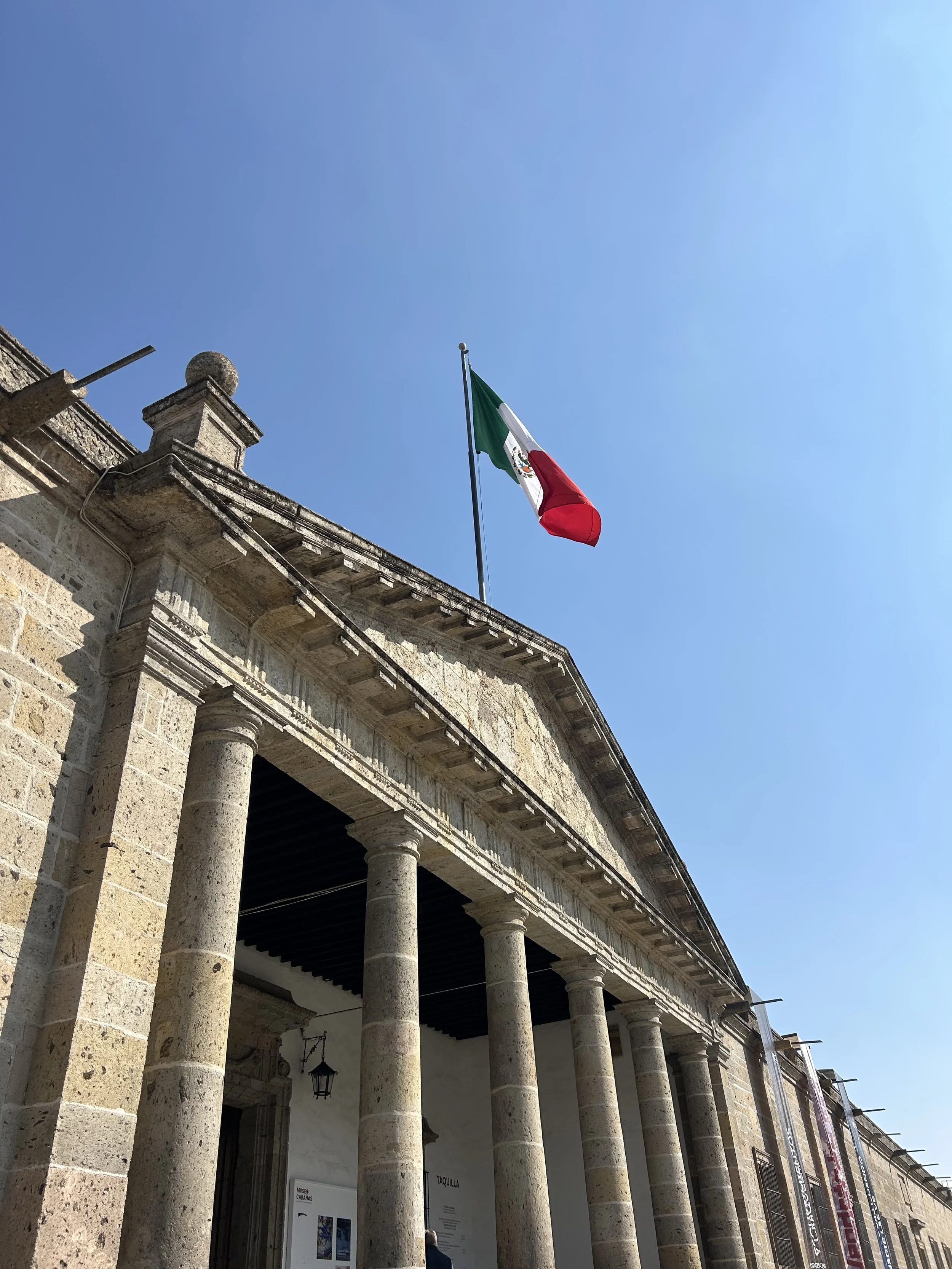
Located in the historic center of Guadalajara, Hospicio Cabañas, now known as Museo Cabañas, is one of the most important architectural landmarks in Mexico. Built between 1796 and 1810, the complex was originally designed as an orphanage and hospital. It was created under the direction of Bishop Juan Ruiz de Cabañas and designed by architect Manuel Tolsá, who was inspired by large European buildings such as Les Invalides in Paris and El Escorial in Spain.
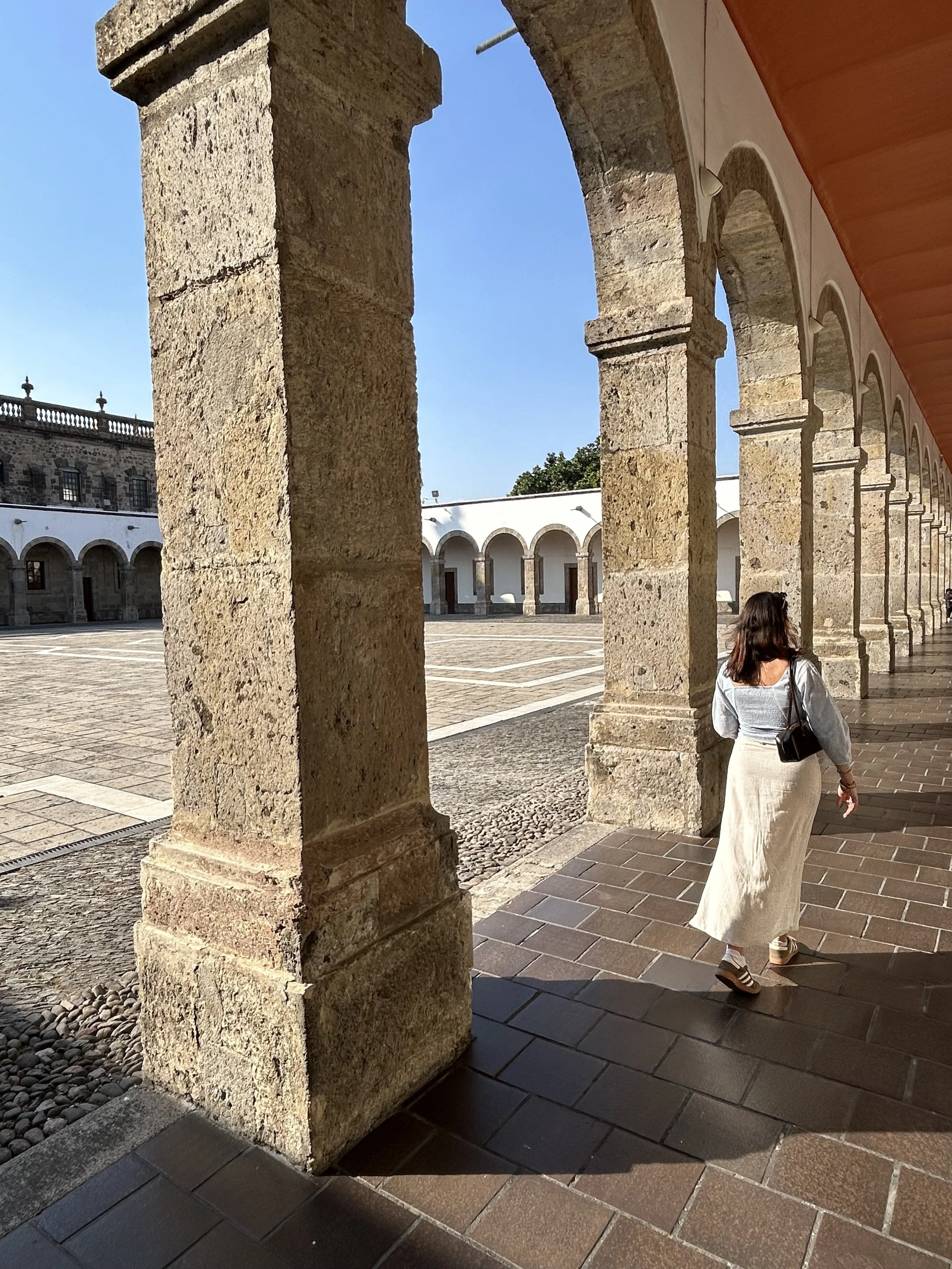
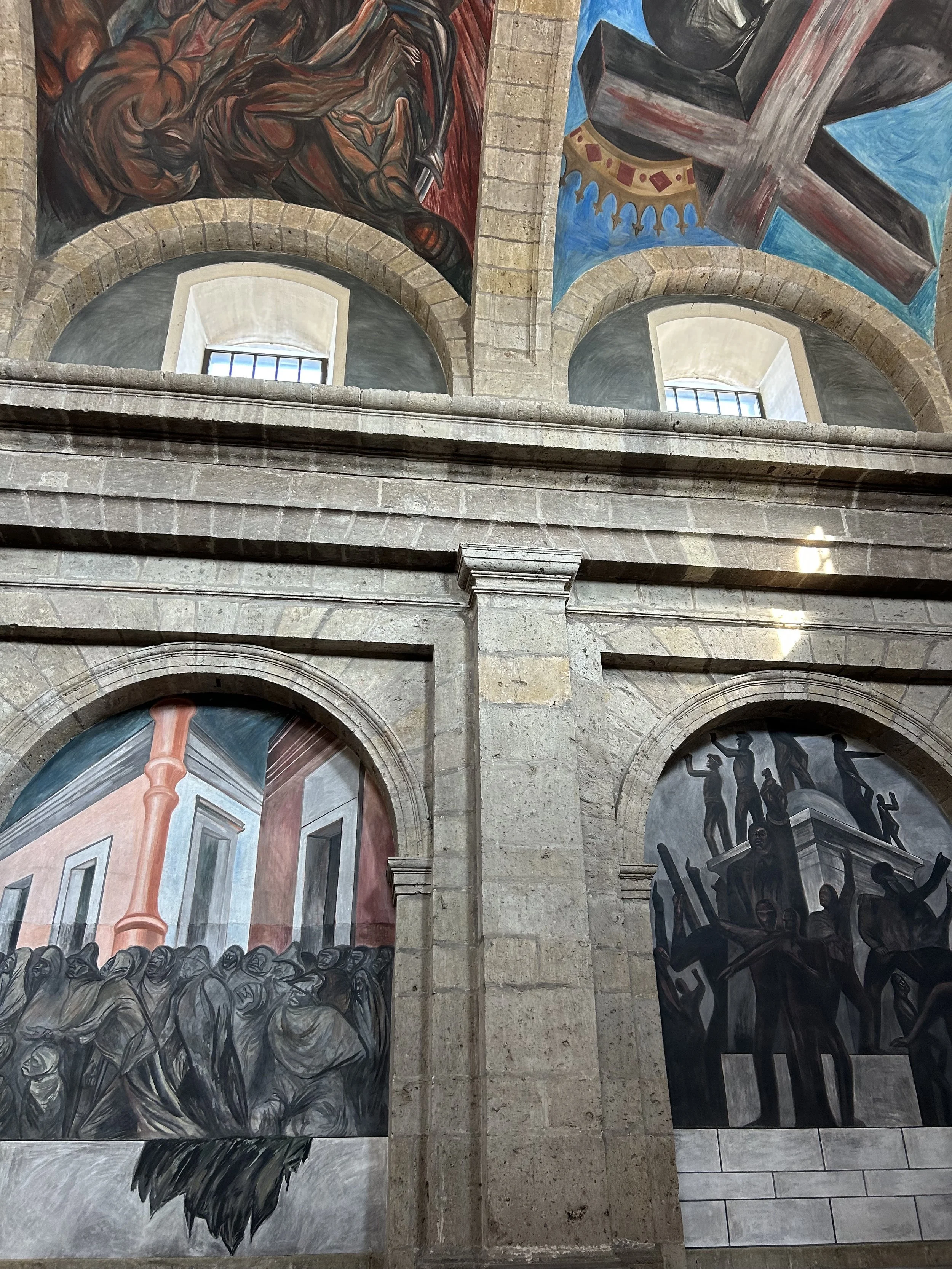
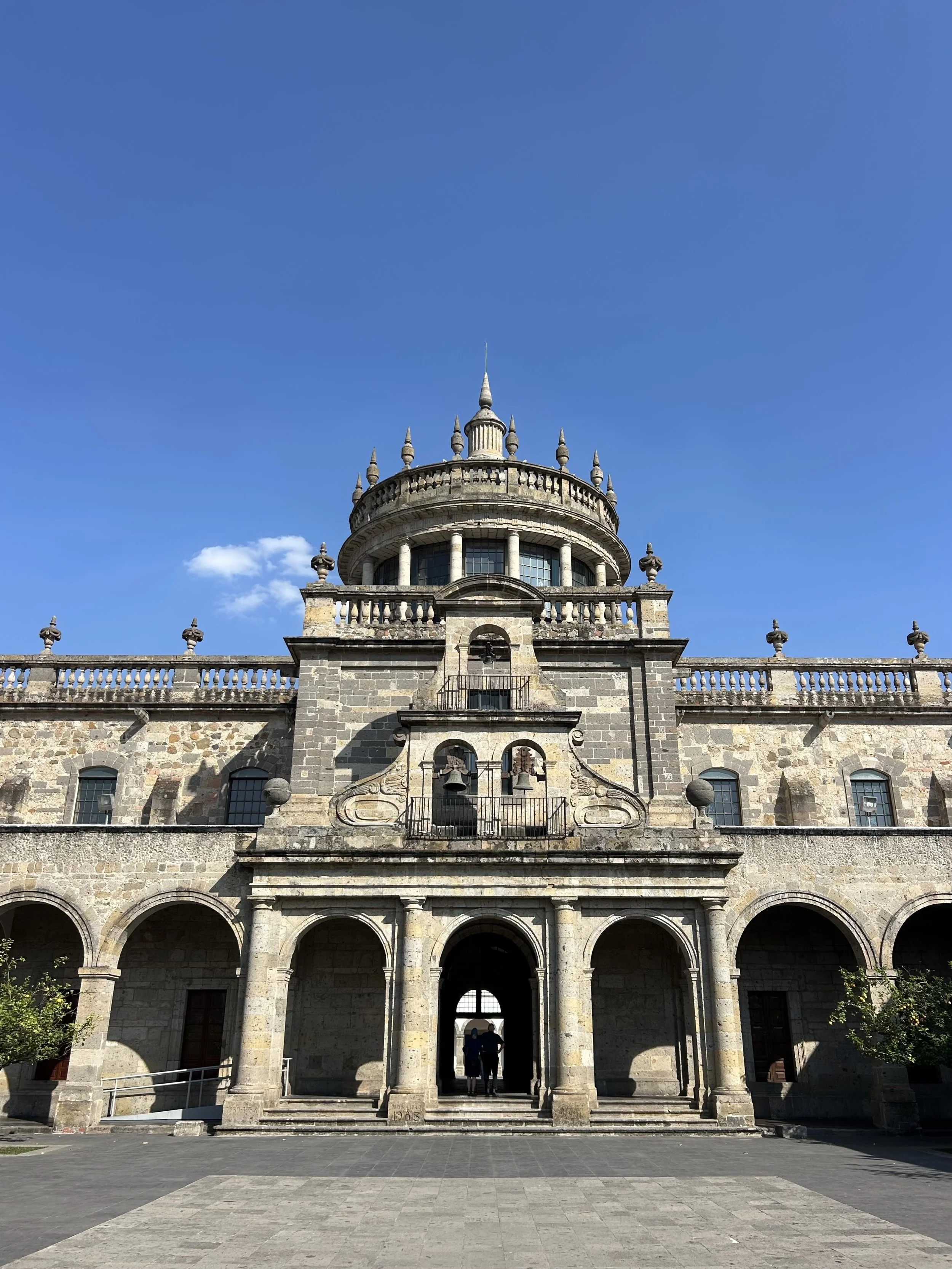
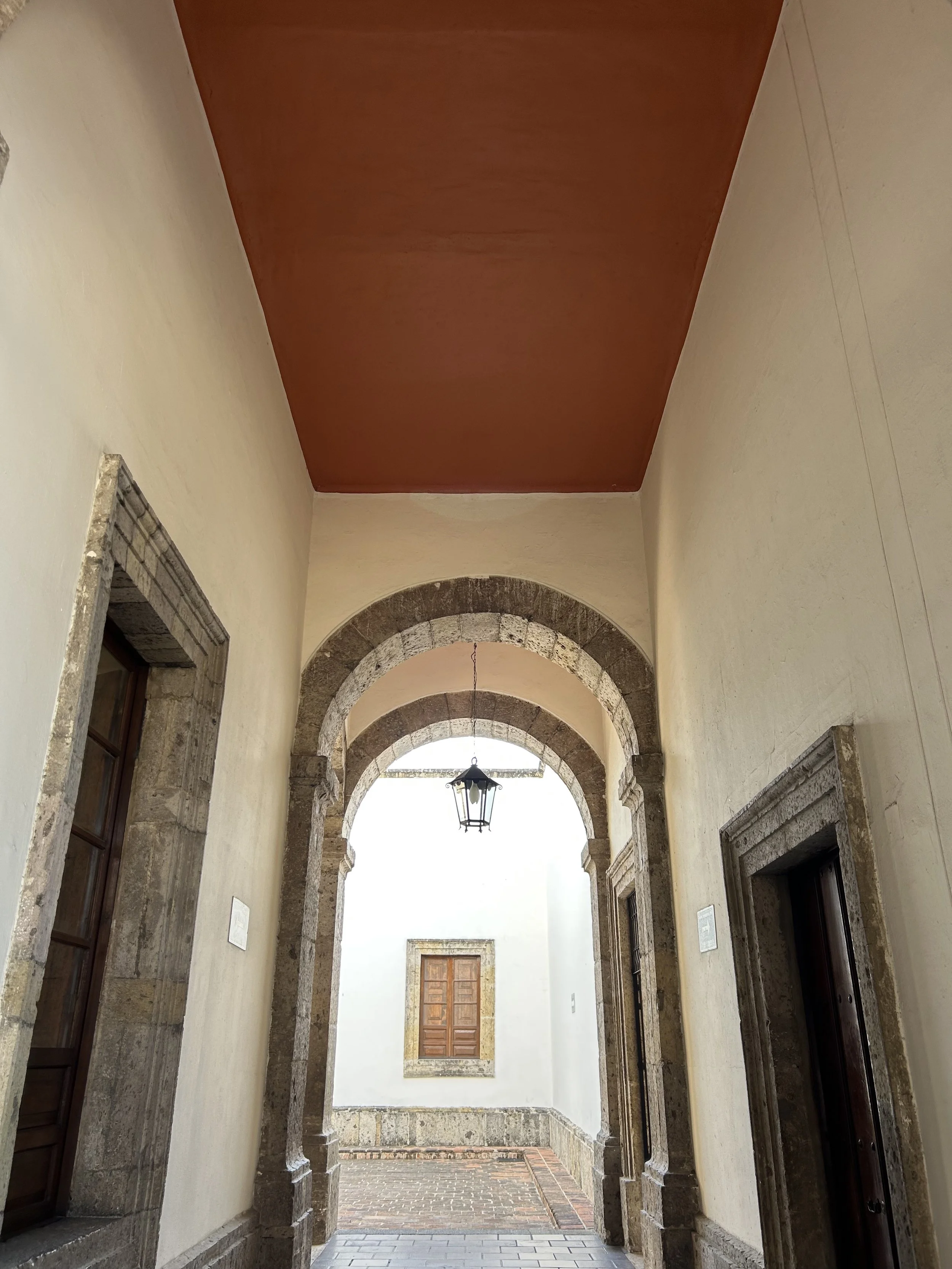
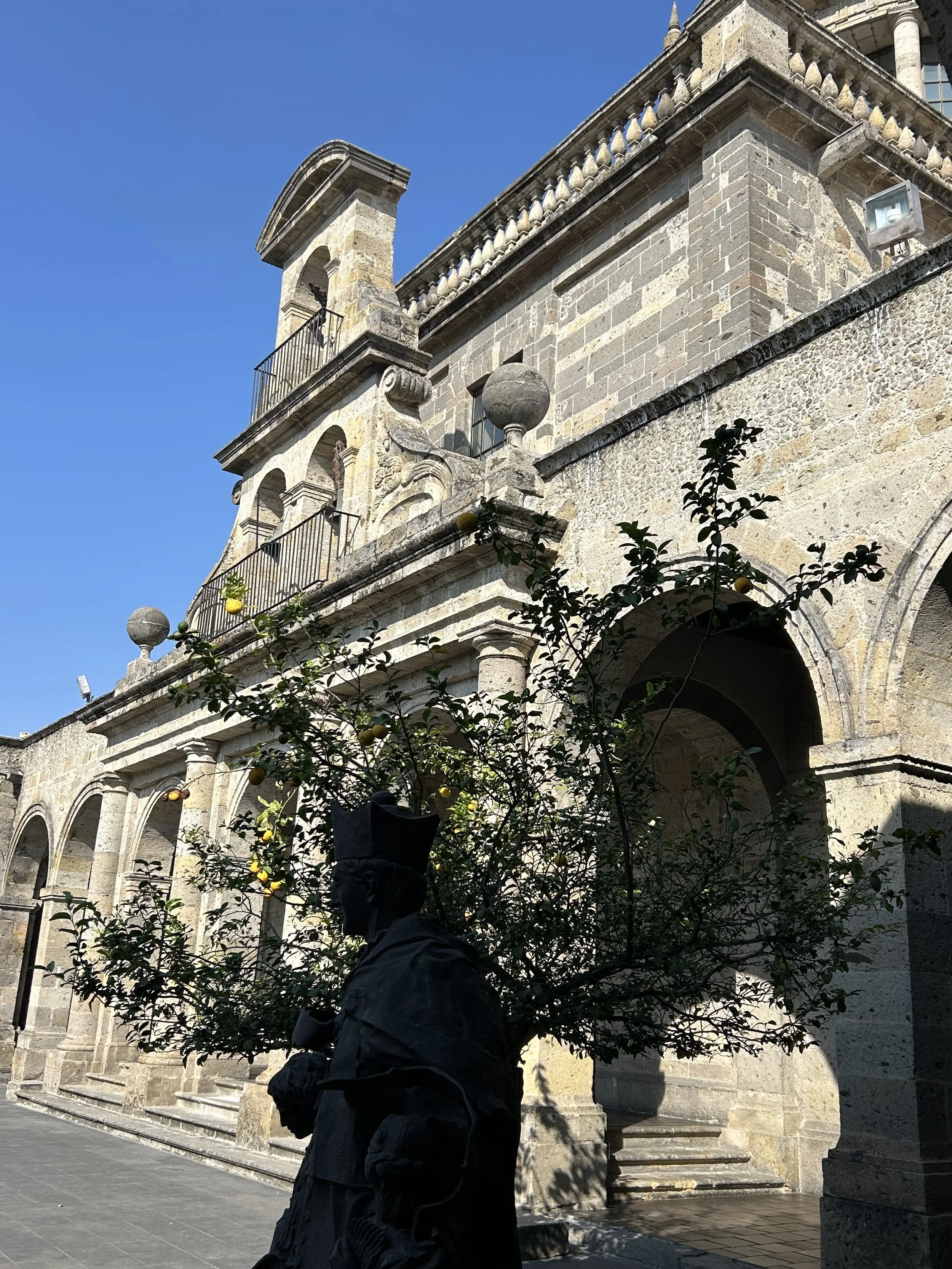
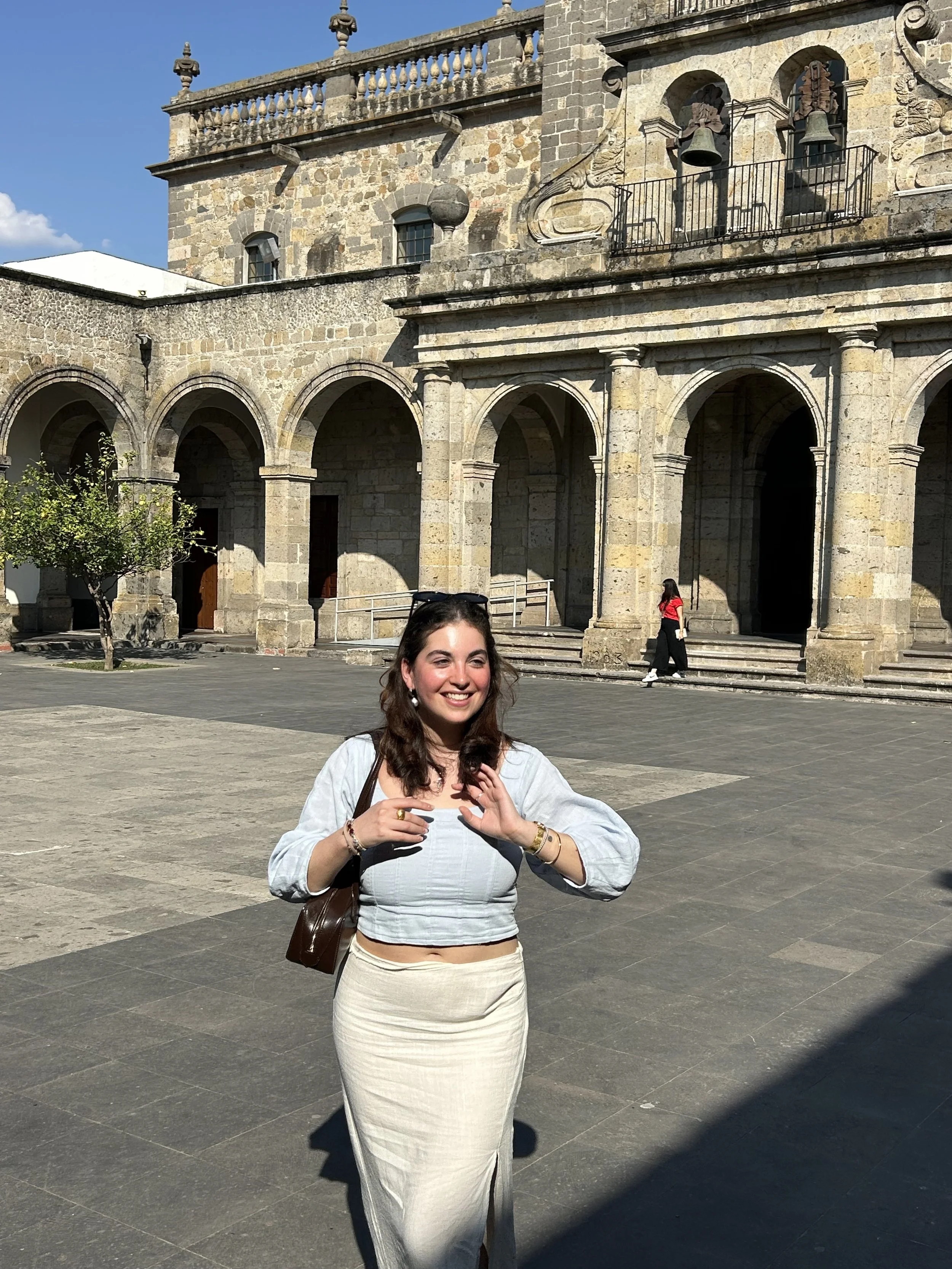
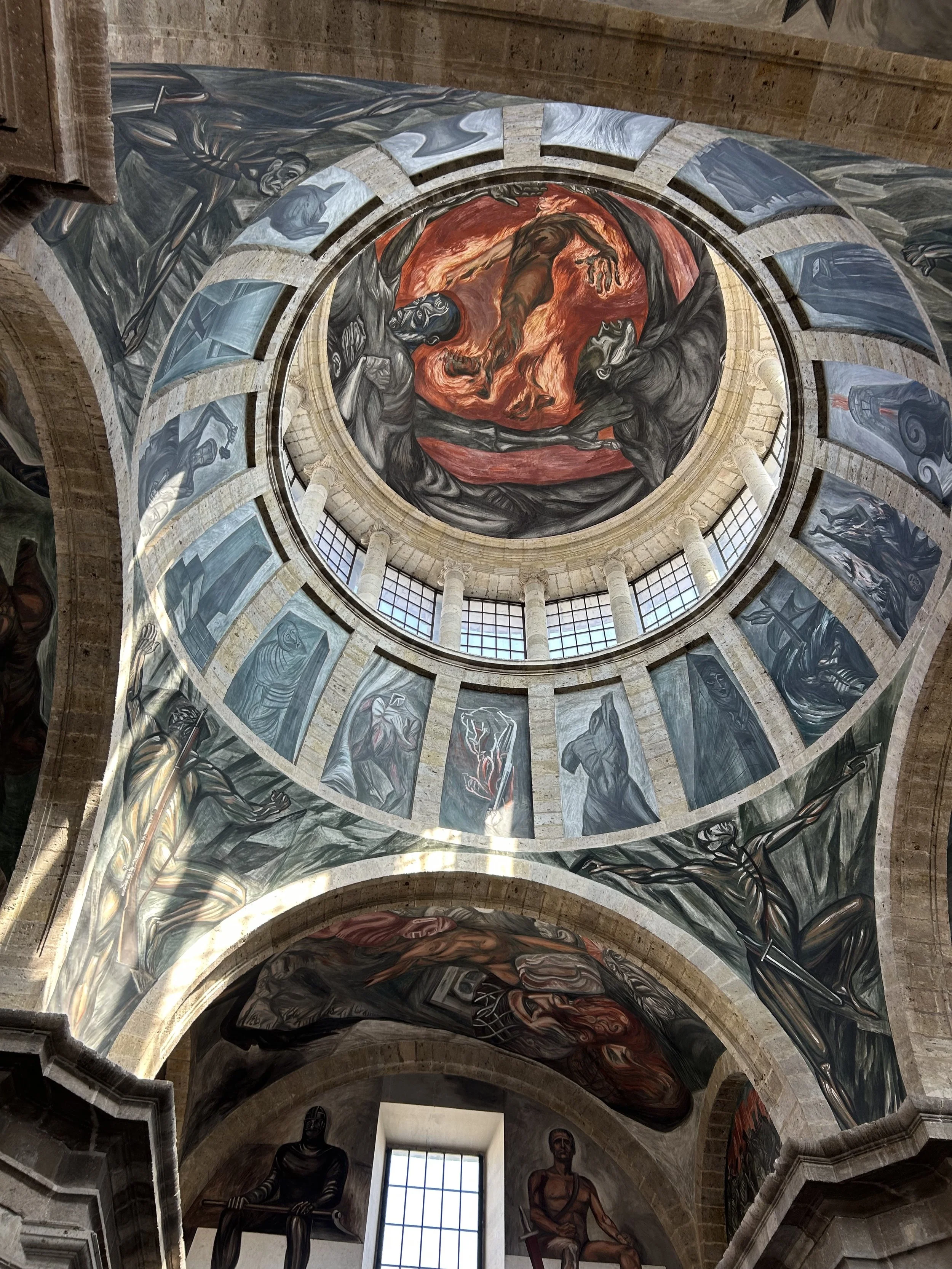
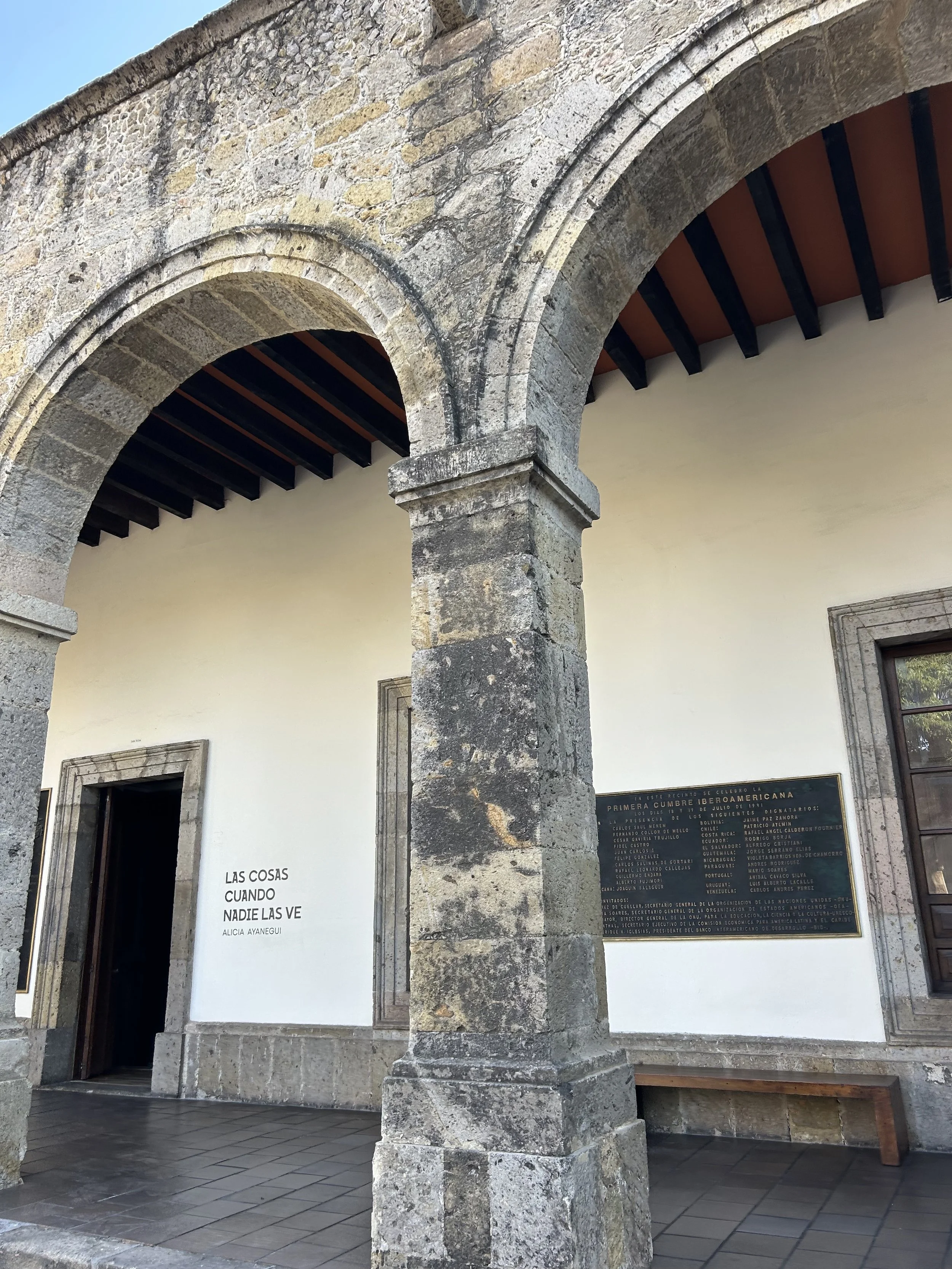
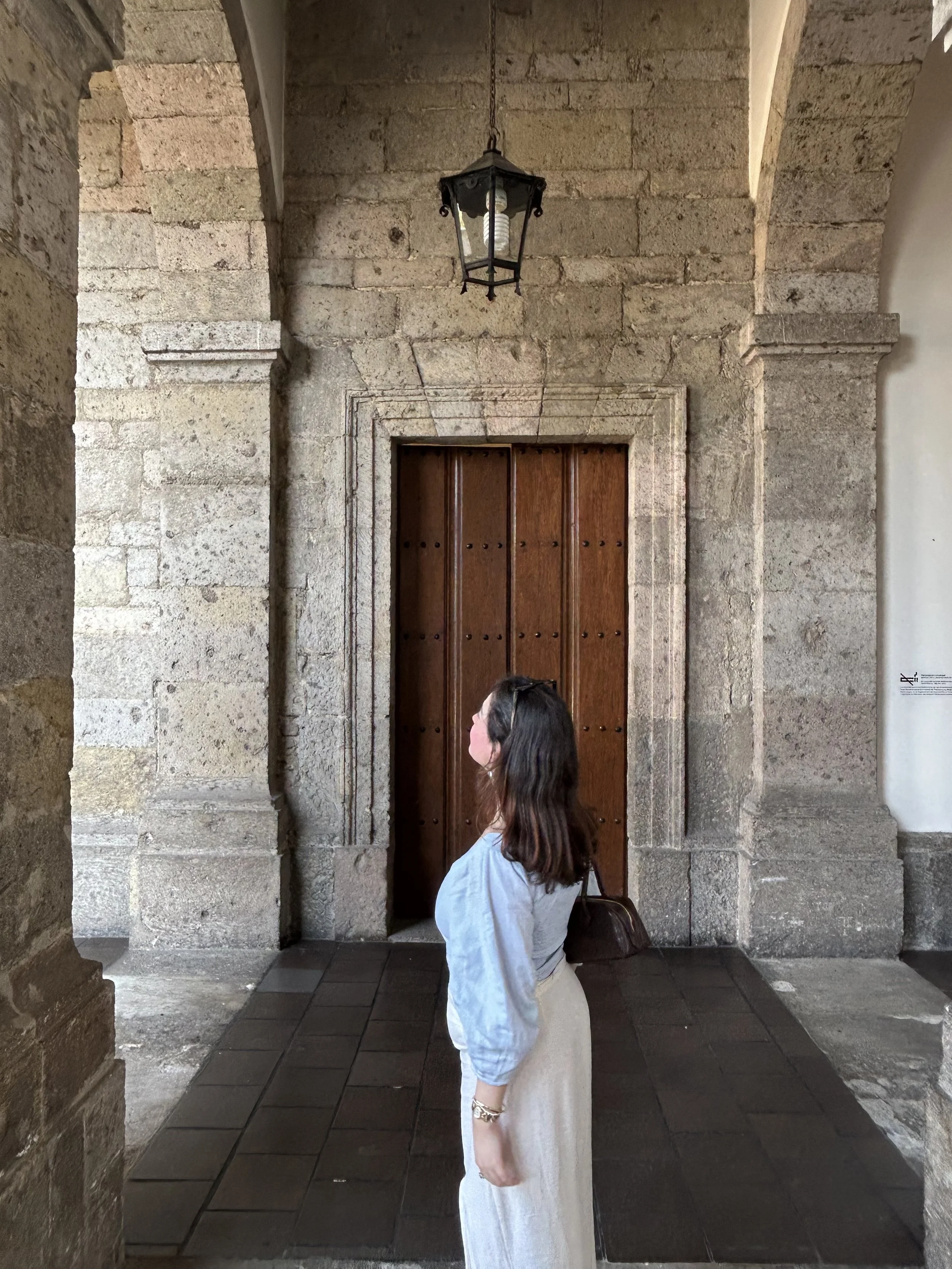
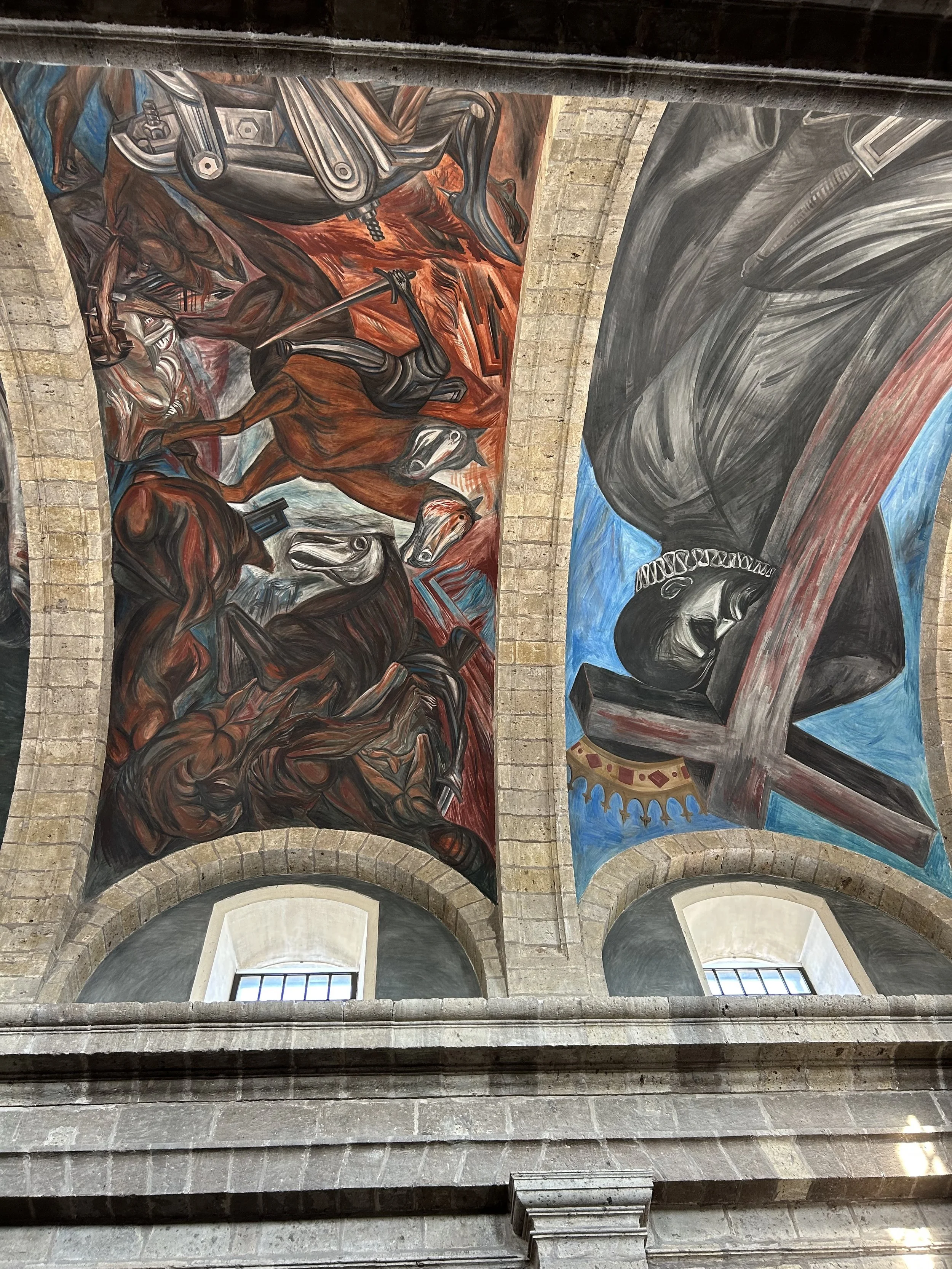
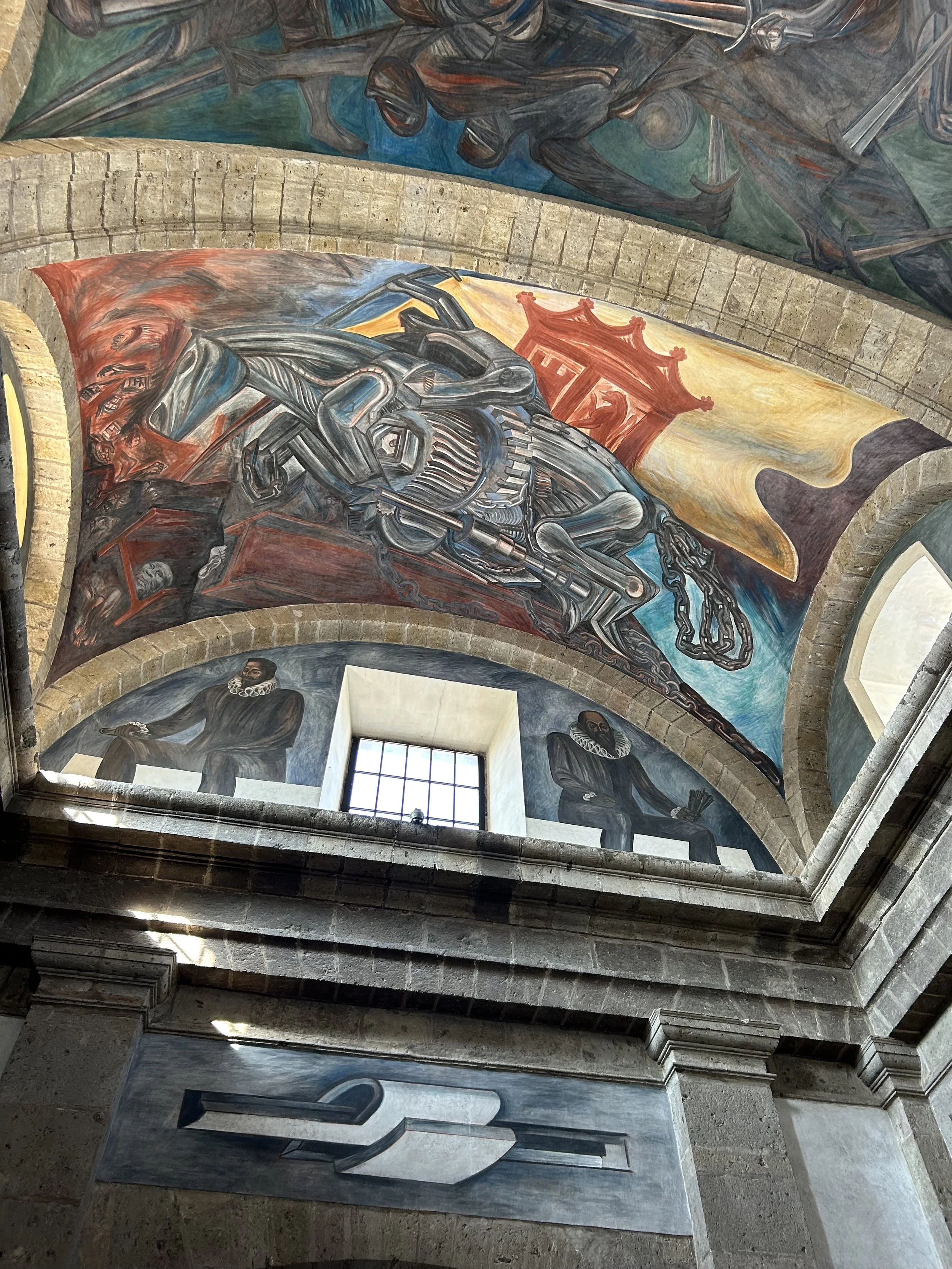
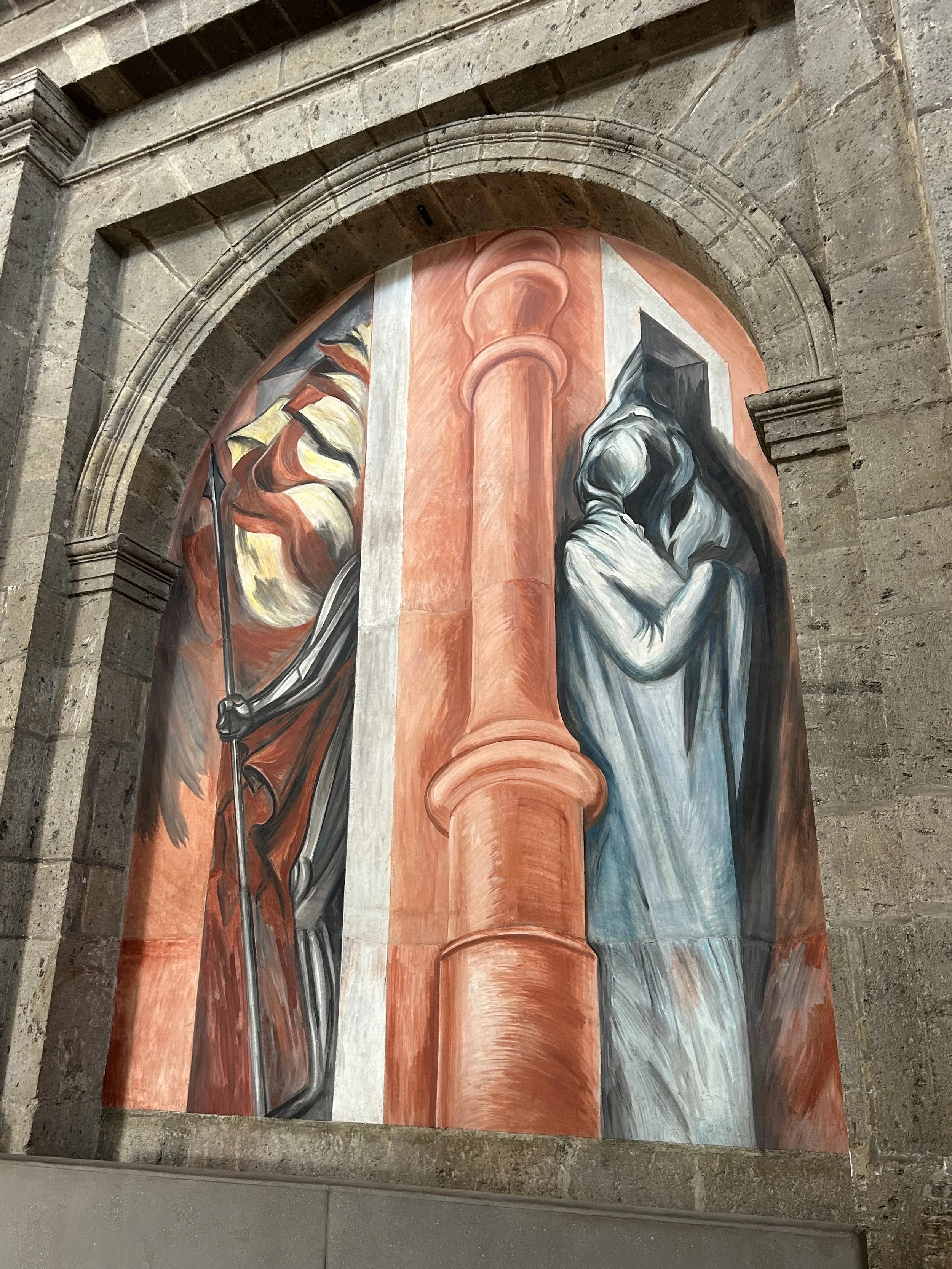
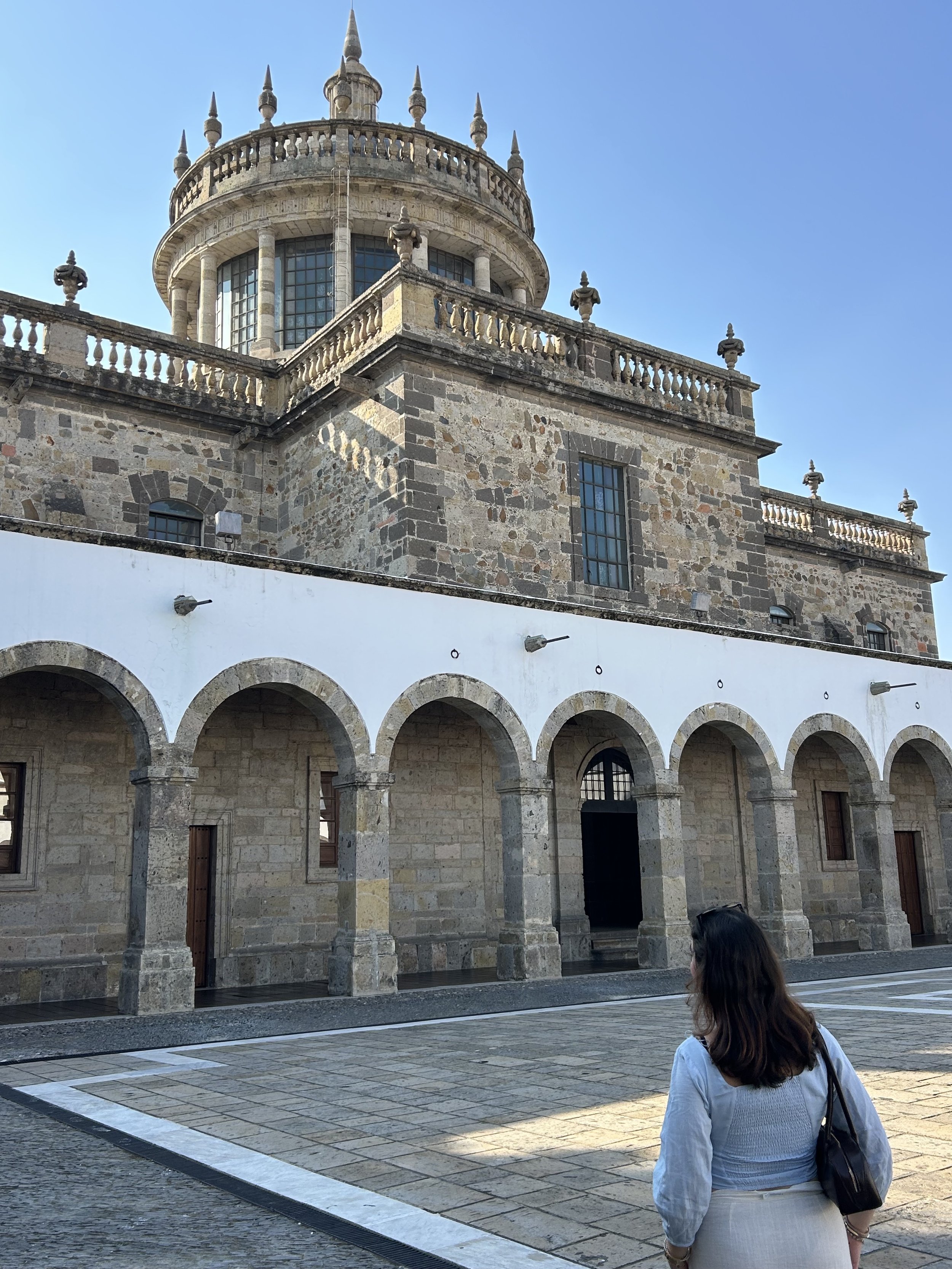
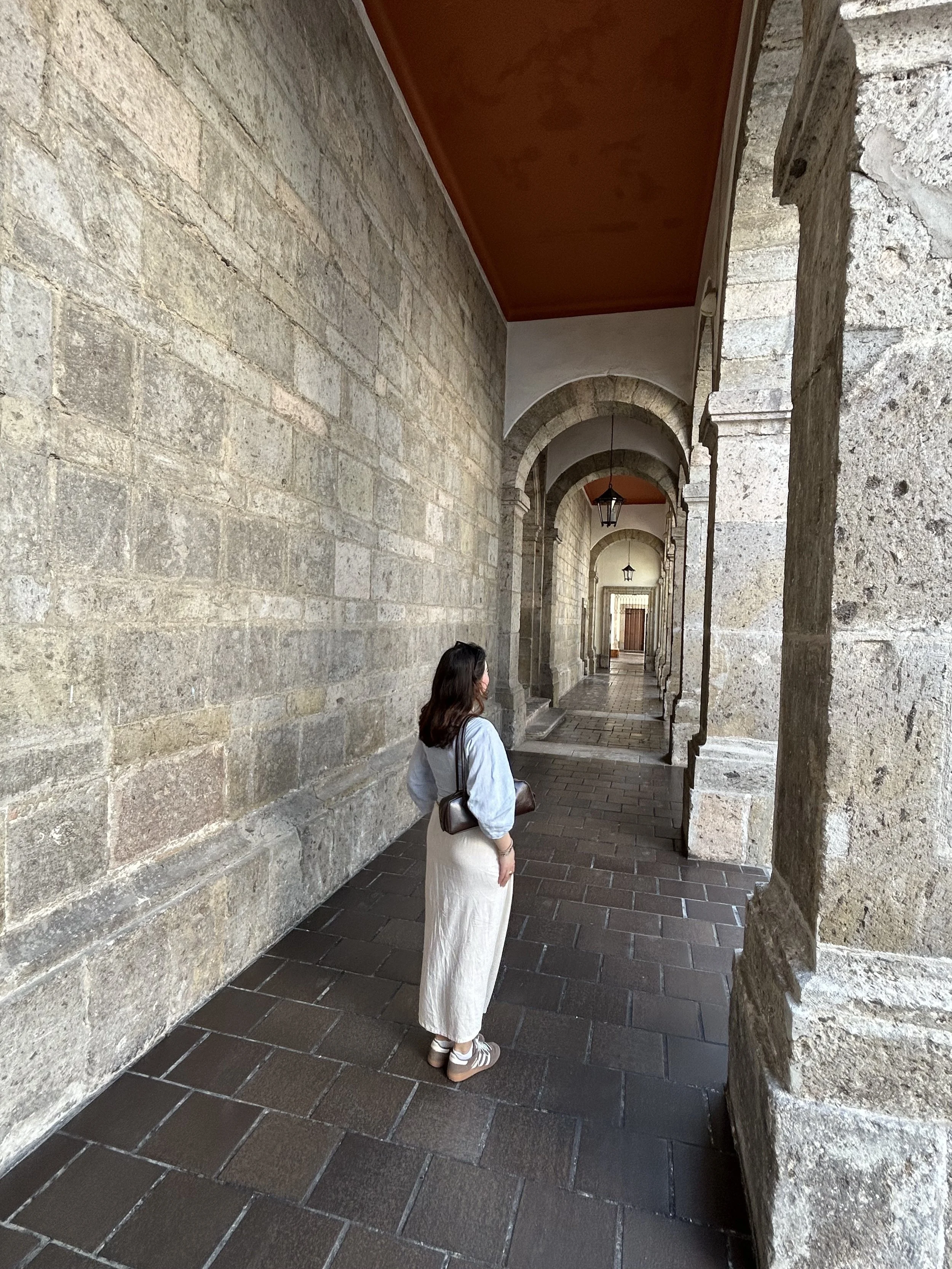
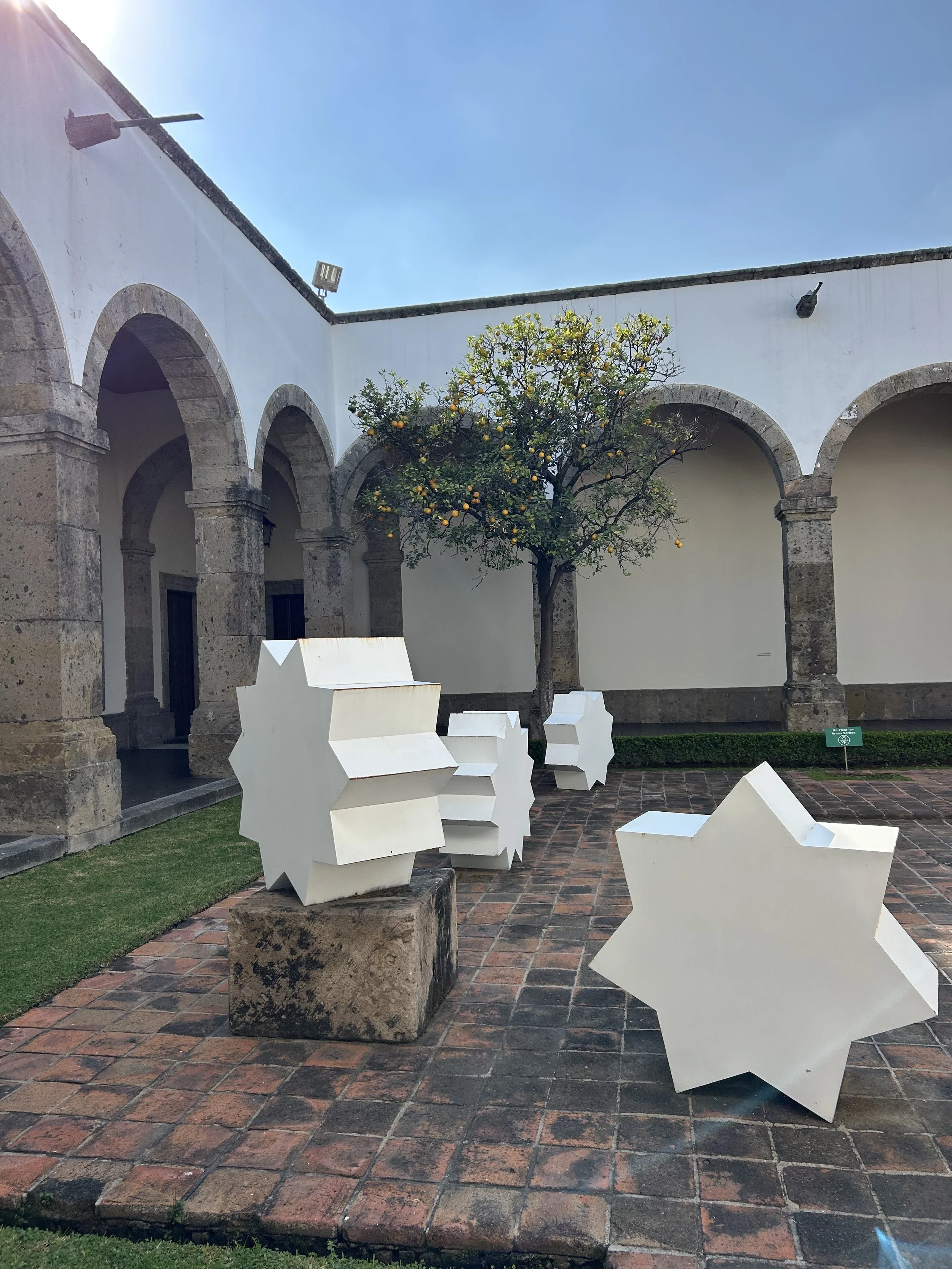
The structure is defined by long corridors, repeated arches, and open courtyards arranged in a large rectangular plan. The buildings are low and spread across one level, allowing light and air to move easily through the space. At the center stands the chapel, crowned by a dome that rises above the calm geometry of the complex. Inside, the museum houses the monumental frescoes of José Clemente Orozco. Painted in the 1930s, his murals, especially The Man of Fire beneath the dome, bring dramatic energy to the otherwise restrained architecture. The contrast between the quiet structure and the intensity of Orozco’s work creates a powerful experience.
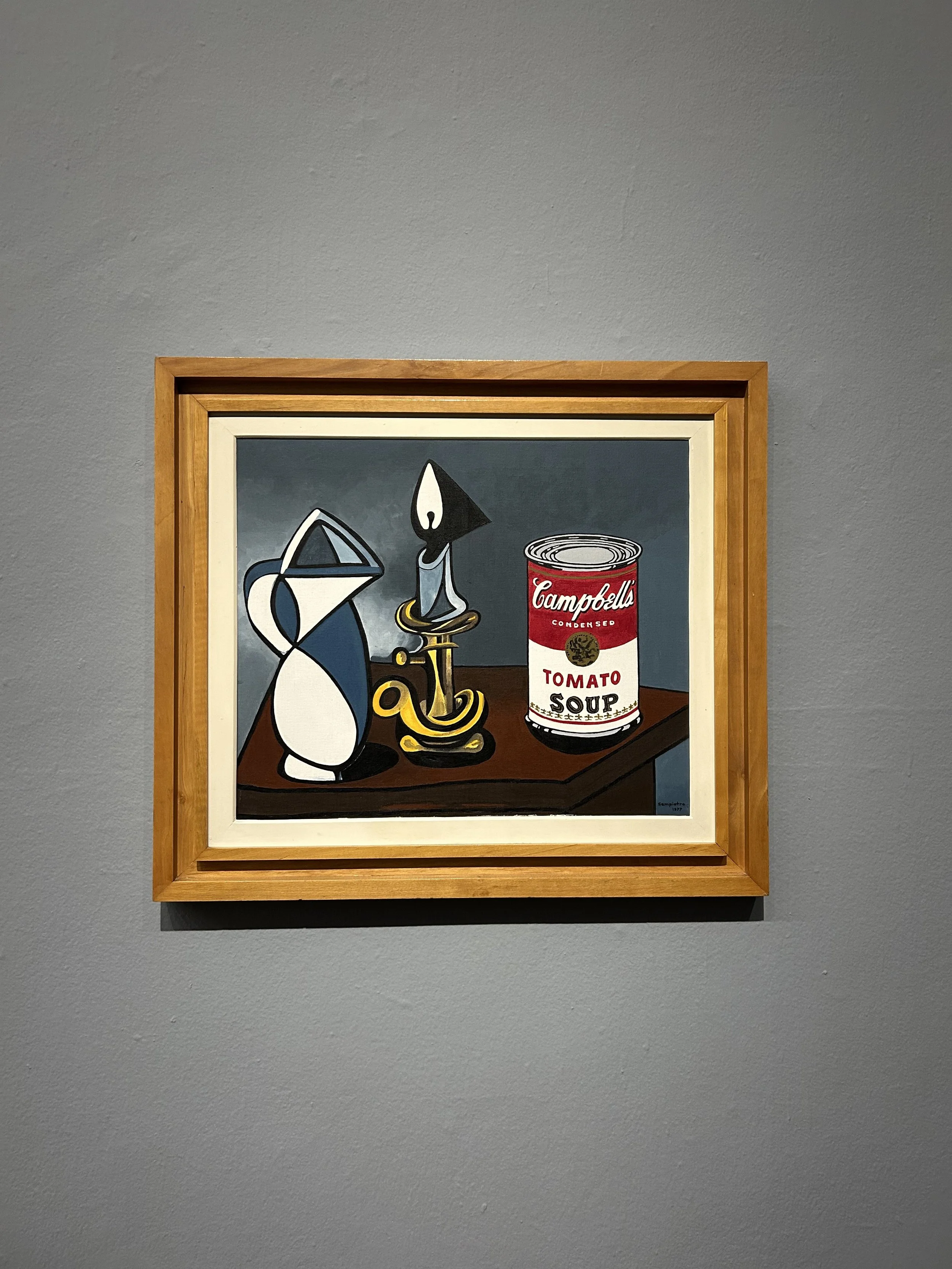
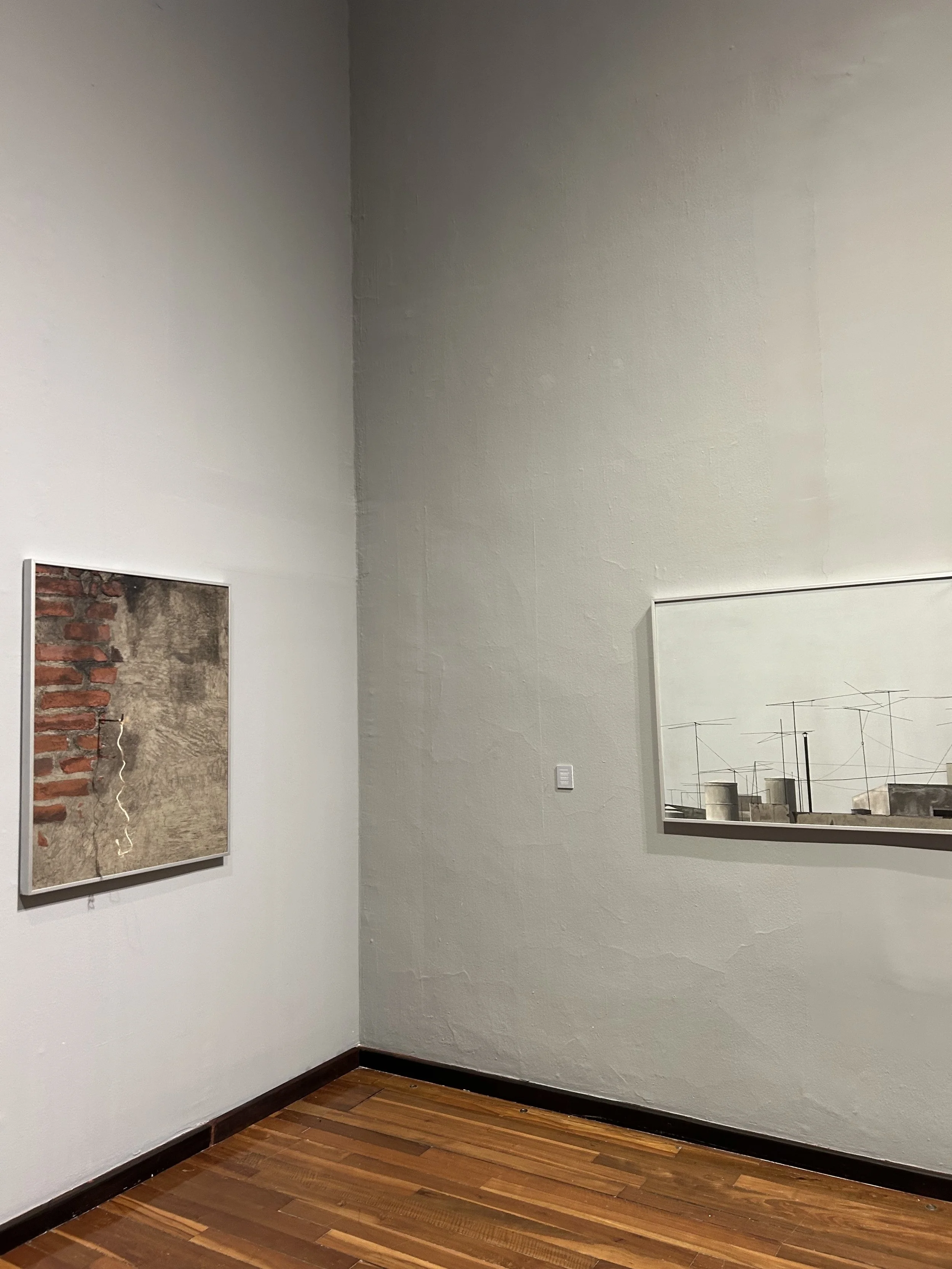
In 1997, Hospicio Cabañas was named a UNESCO World Heritage Site. Today, it functions as a cultural center and museum, holding both historic murals and contemporary exhibitions.
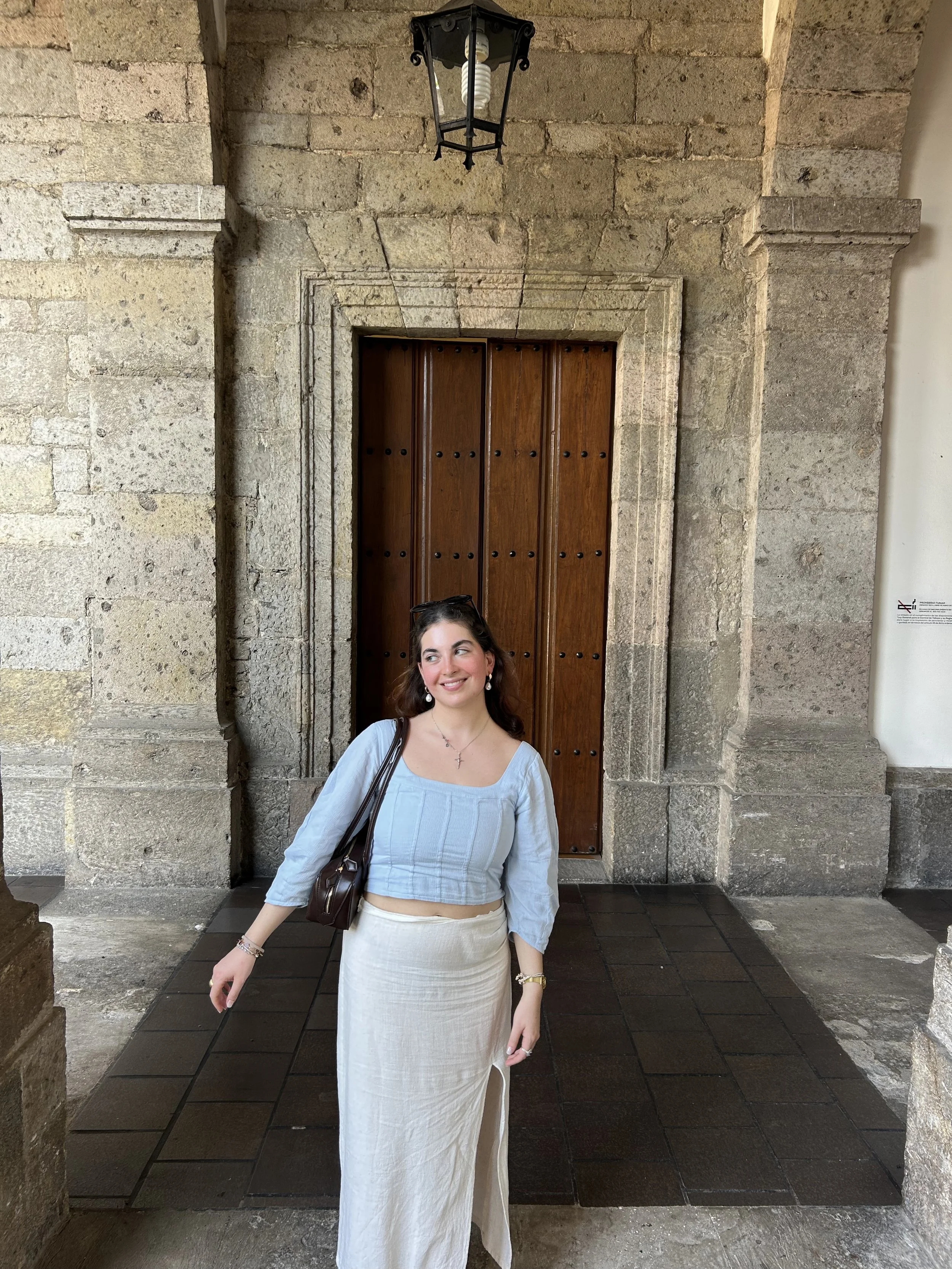
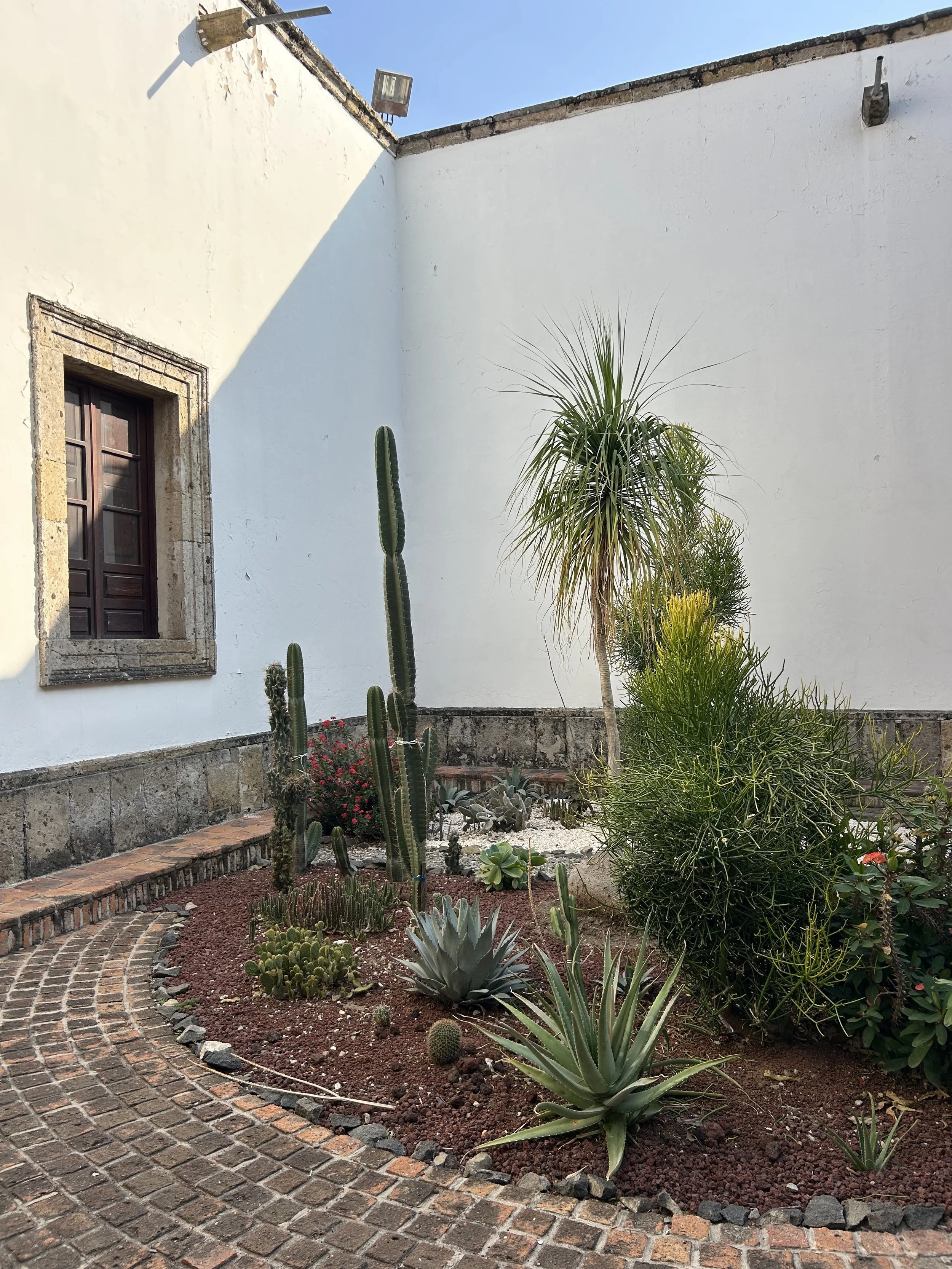
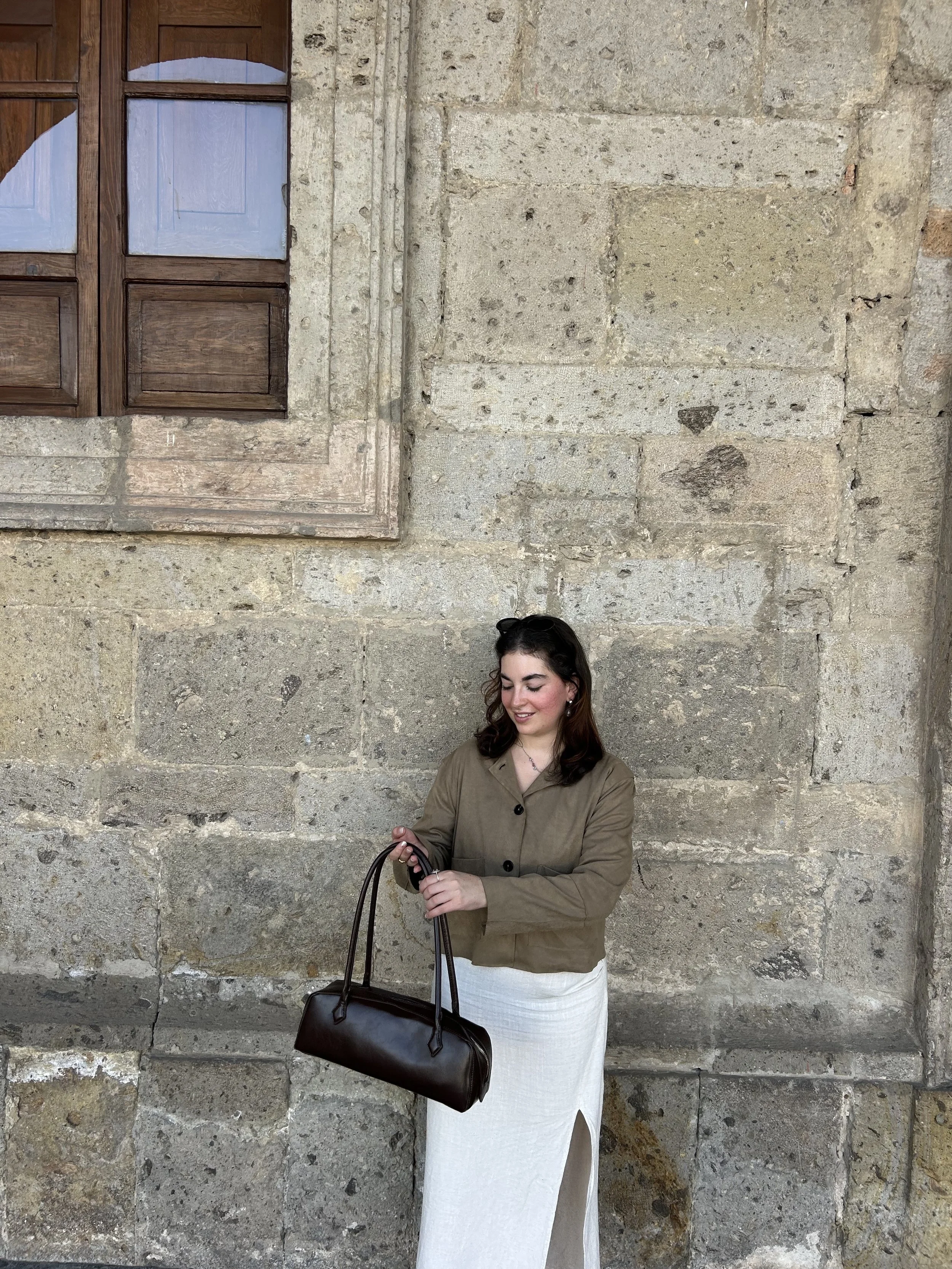
Below are a few moments from the space.
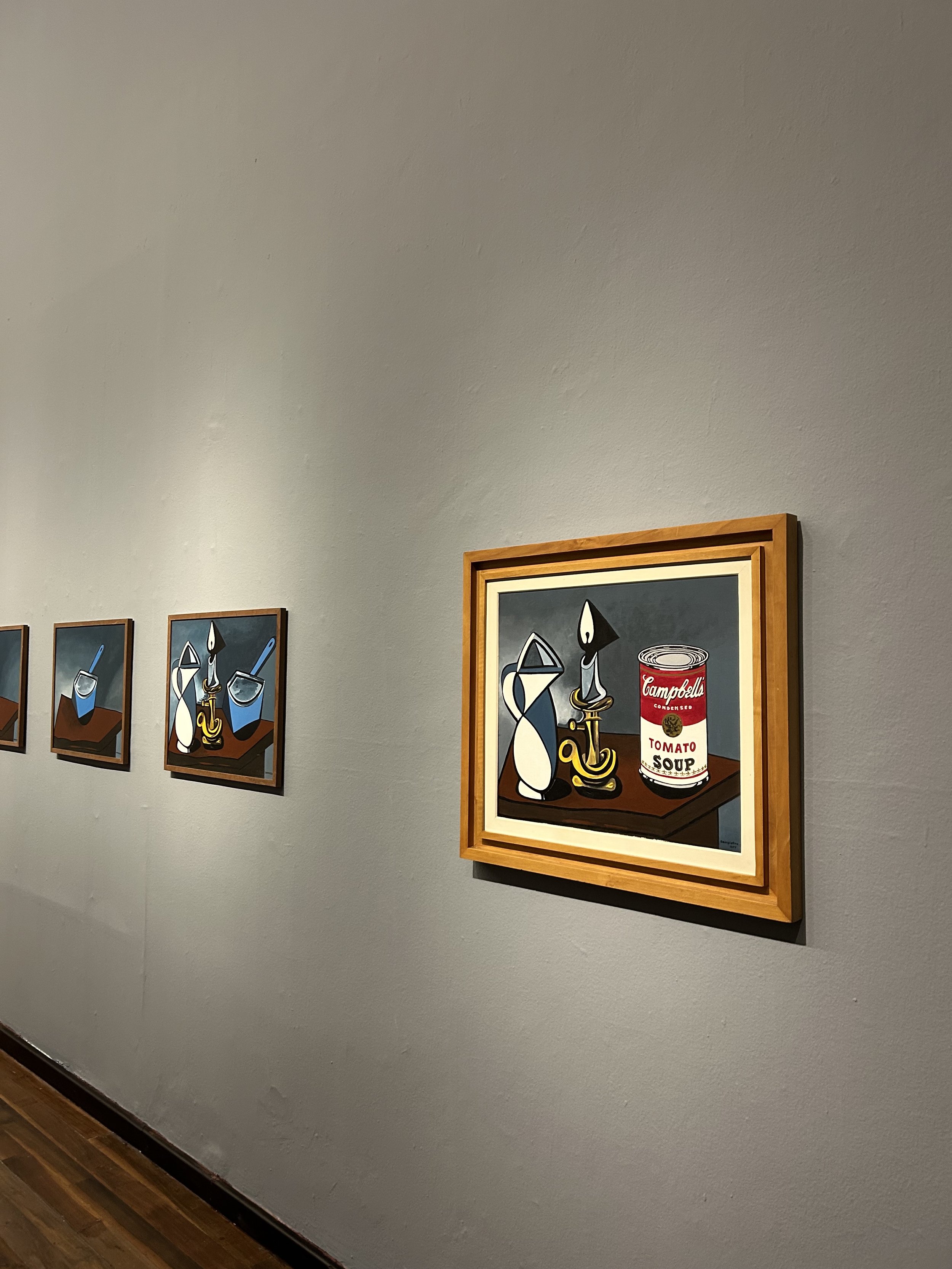
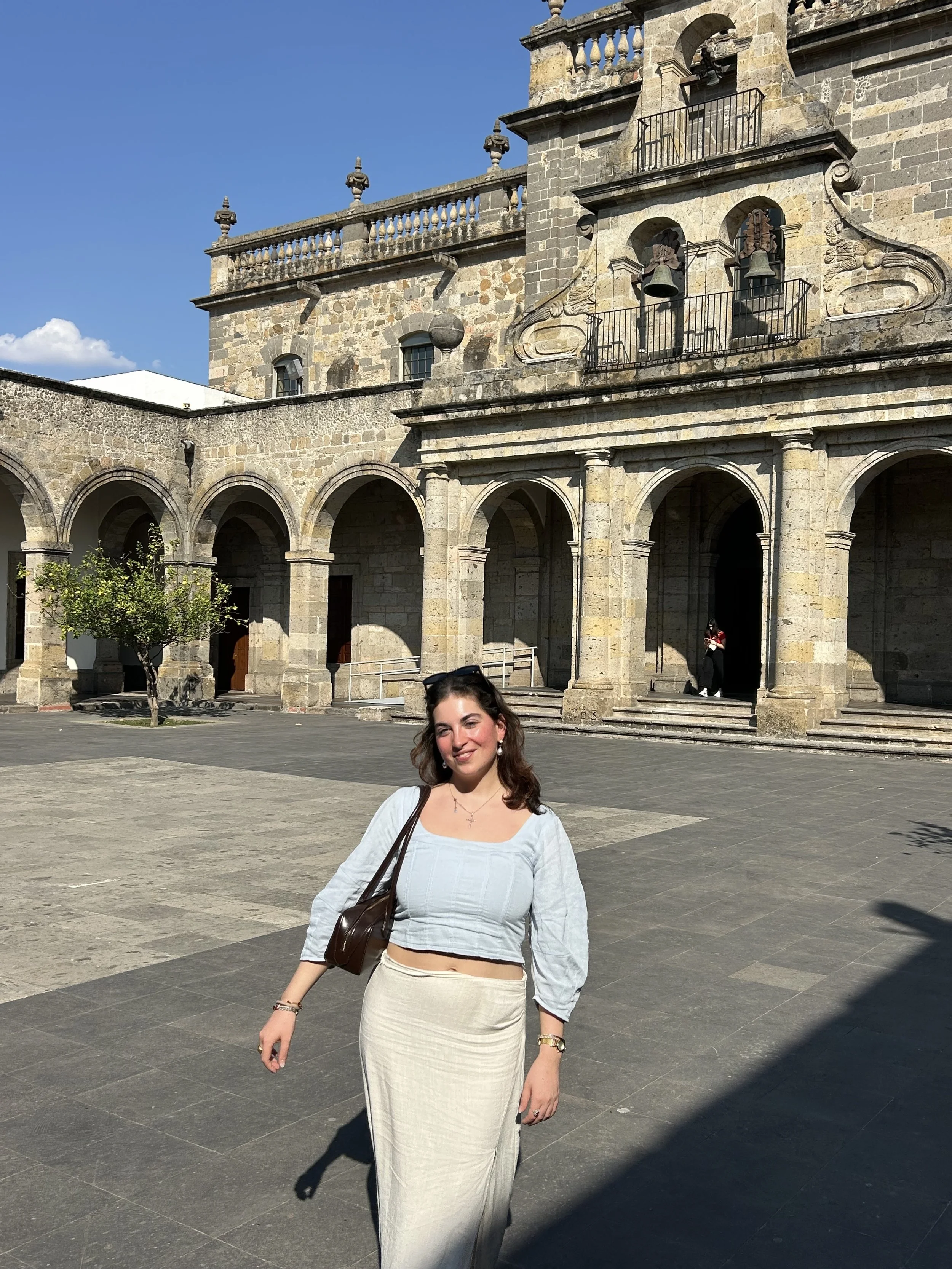
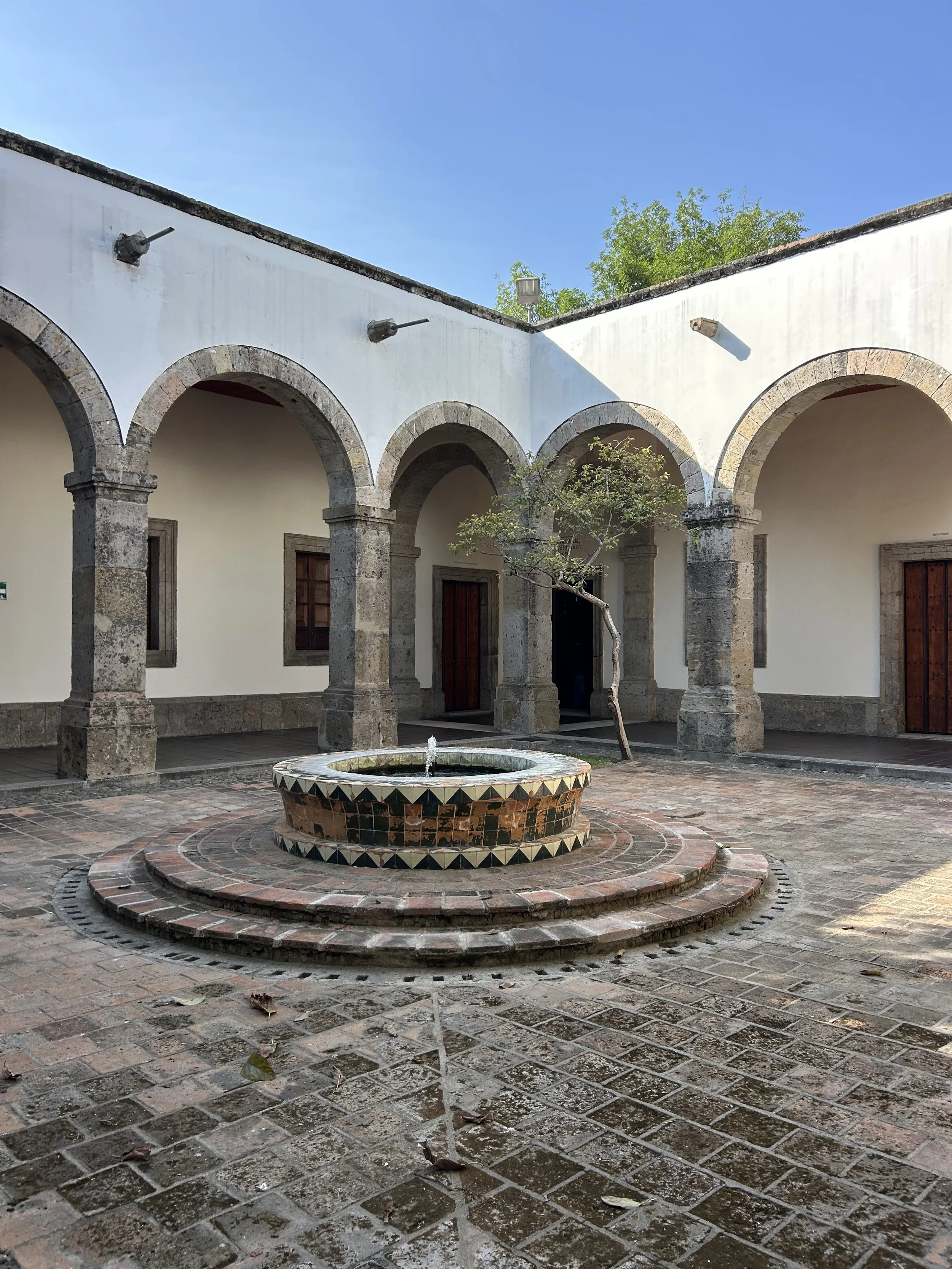
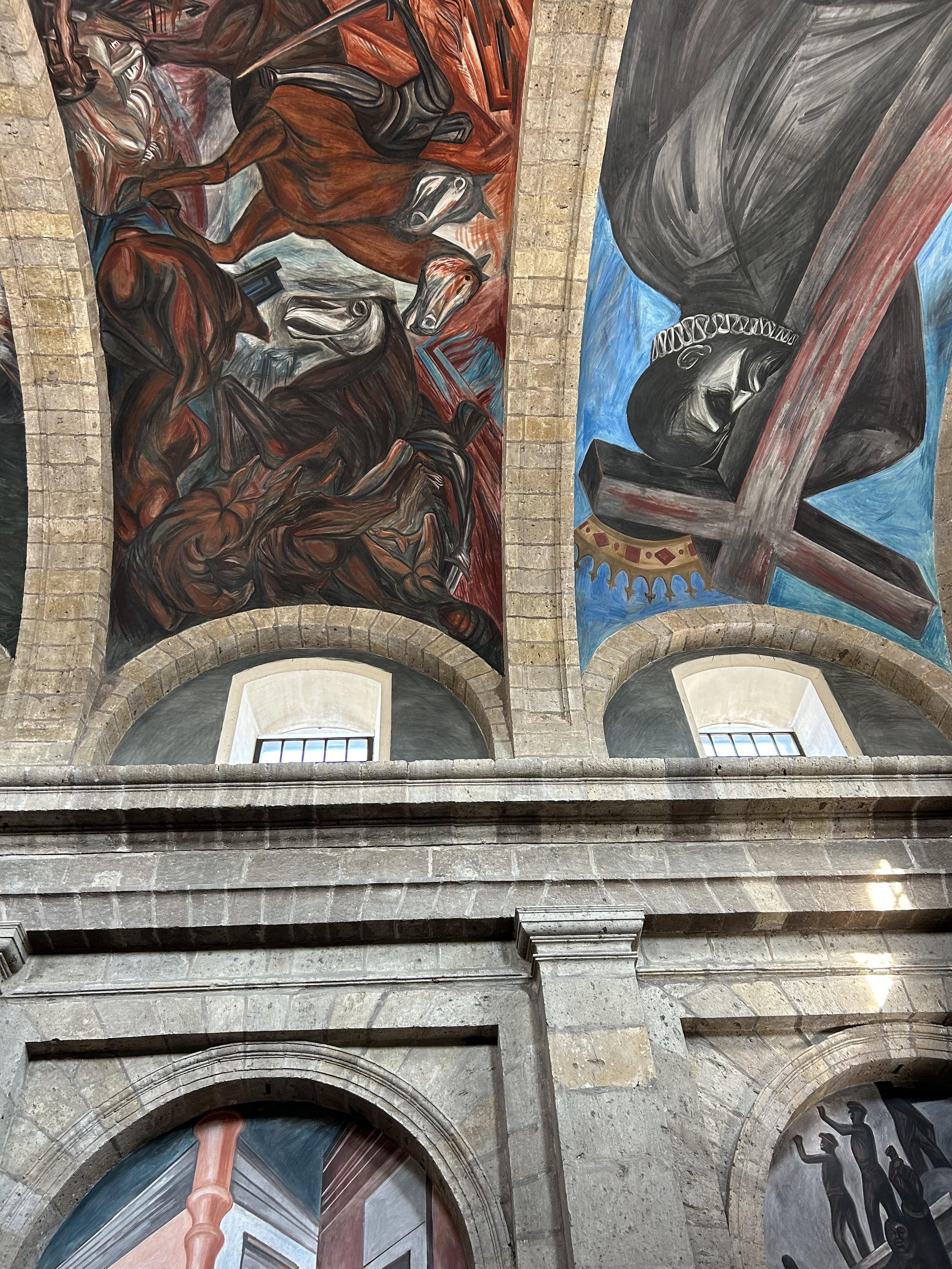
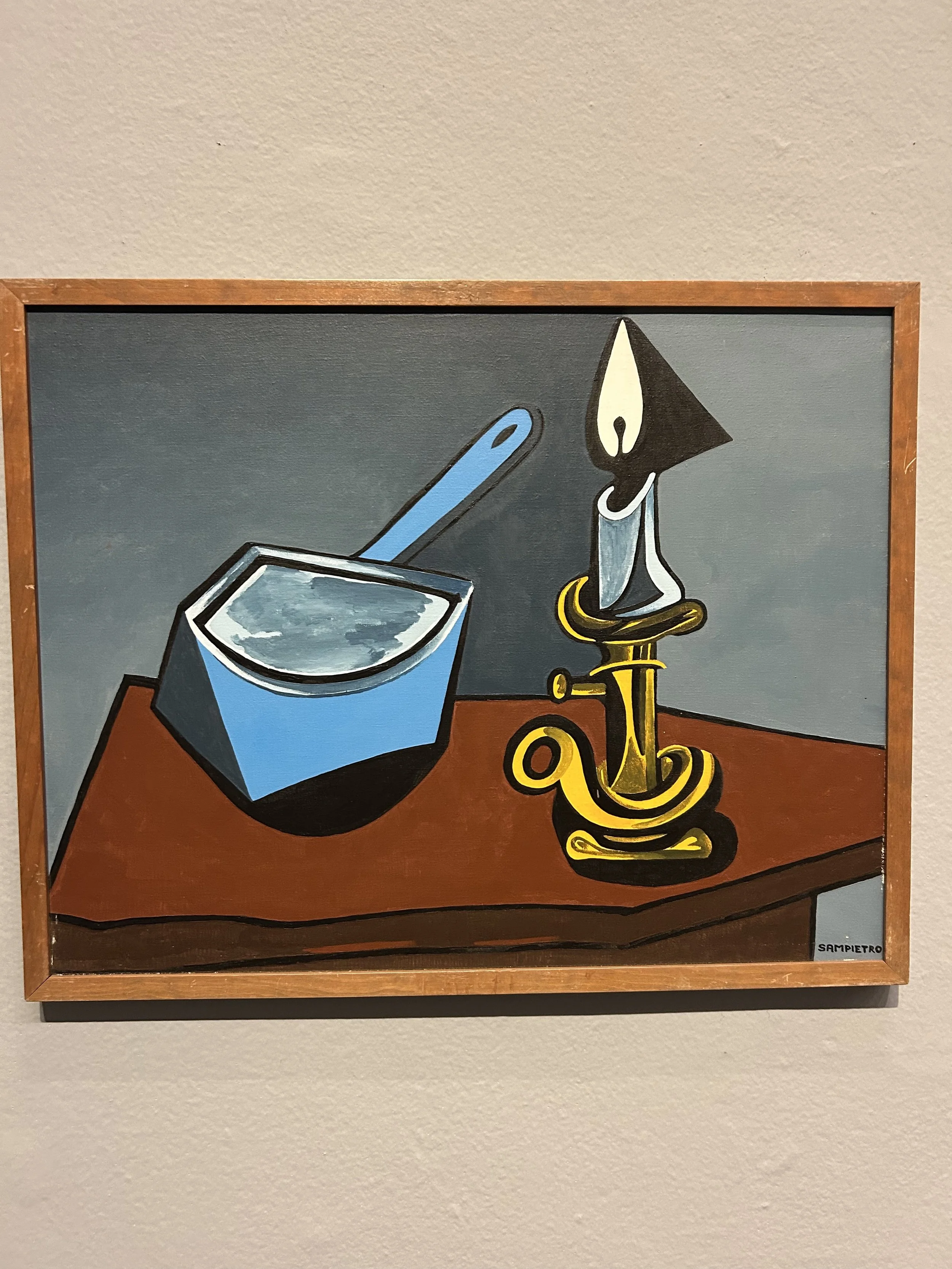
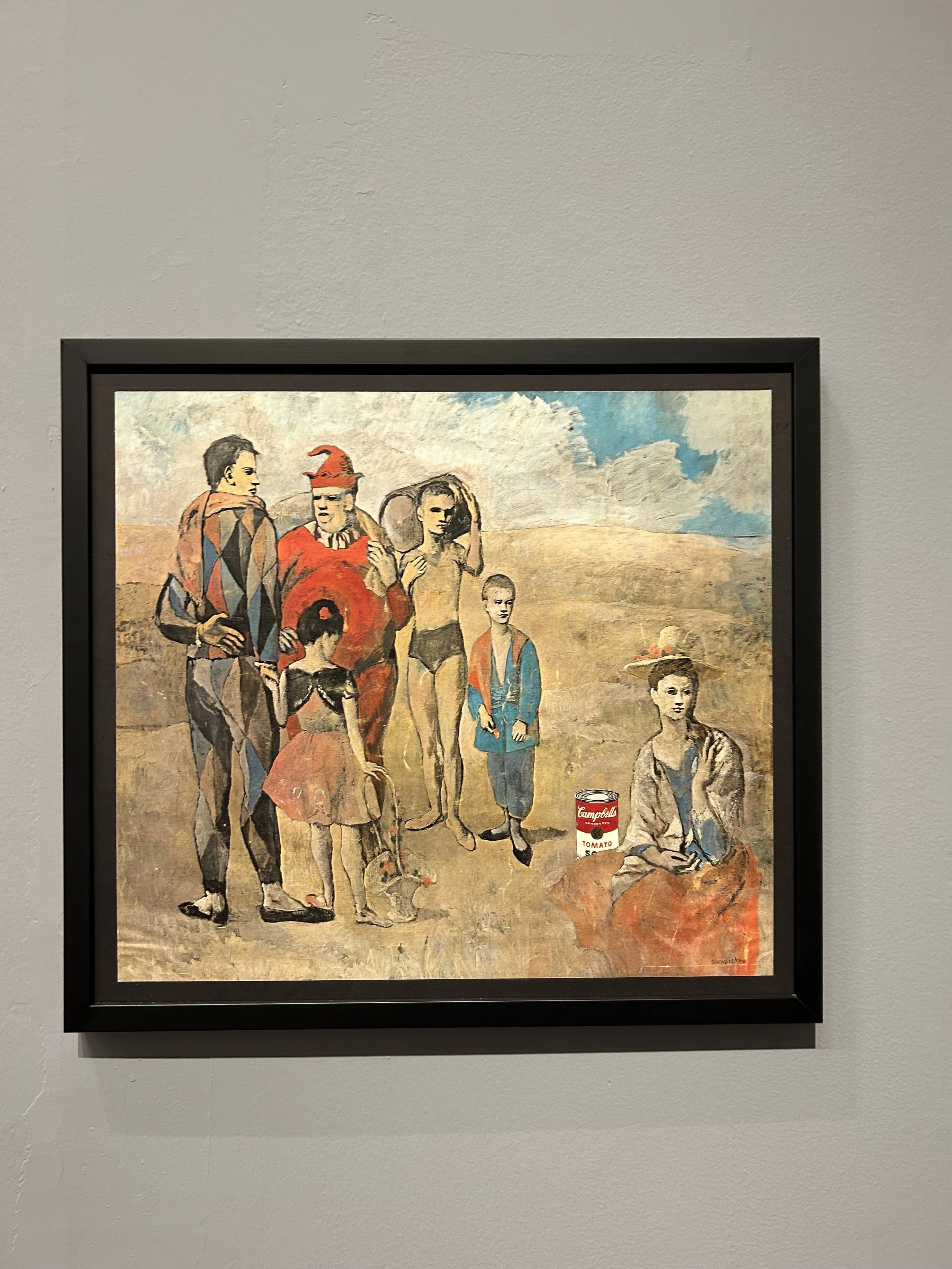
Personal Reflections
Museo Cabañas was definitely an interesting experience for me, and I have been reflecting a lot on the different emotions I felt while walking through the courtyards and moving between exhibitions and the mural-filled spaces.
The building itself feels calm and structured. The open courtyards, long corridors, and symmetrical layout create a sense of balance. There is light, space, and room to breathe. At moments, it felt peaceful.
Inside the chapel and surrounding rooms, however, the atmosphere shifts. The murals by José Clemente Orozco are intense and direct. They explore themes of conflict, suffering, and human struggle. Standing beneath The Man of Fire, I felt the scale and emotional force of the work in a very physical way. The imagery is powerful and, at times, unsettling. I also couldn’t ignore the building’s history. Originally constructed in the early nineteenth century as an orphanage and hospital, it was designed to house the vulnerable. Knowing that added another layer to the experience. The large, echoing halls and rigid symmetry can feel almost institutional, which contrasts strongly with the emotional charge of the murals. What stayed with me most was that tension, the calm, ordered architecture alongside artwork that feels chaotic, urgent, and heavy. The combination creates an experience that is not simply beautiful, but complex and emotionally layered.