The Carolyn Bessette-Kennedy Effect
Over the past few months, Carolyn Bessette-Kennedy has been trending across social media platforms. Fashion enthusiasts have been recreating her outfits and bringing renewed attention to her minimalist 1990s wardrobe. Photographs taken by paparazzi in 1990s New York now circulate endlessly across Pinterest boards, Instagram reels, and TikTok edits, where people try to reinterpret her understated way of dressing.
There has always been a certain fascination surrounding Carolyn Bessette-Kennedy, a quiet charm connected to her reserved personality and the mystery around her life. This attention has grown even more recently with the release of Love Story: John F. Kennedy Jr. & Carolyn Bessette on Hulu in February 2026, introducing her to a generation that did not witness her life in real time.
What is interesting about this resurgence is that it is not only about nostalgia. On social media, her wardrobe is often simplified into a formula:
White button-down.
Black wool coat.
Slip dress.
Bootcut jeans.
Tortoiseshell headband.
Oval sunglasses.
Online, this is often referred to as the “CBK effect.” Many people try to recreate her style using these same pieces. Yet this raises an important question: what exactly is being recreated, and what is being lost in the process?
A Personal Uniform
Carolyn Bessette-Kennedy was not an influencer. She lived and died before the term even existed. A publicist at Calvin Klein, she became a public figure after marrying John F. Kennedy Jr., yet she rarely gave interviews and often avoided public attention. She was known for protecting her privacy and seemed uninterested in participating in fashion trends or public spectacle. Because of this, her style was mostly documented through street photography rather than editorial campaigns.
Her wardrobe was neutral, tailored, and very consistent. She avoided visible logos and frequently repeated outfits, often wearing black paired with a simple red lip. In one widely shared anecdote, she reportedly asked for the logo to be removed from a Prada ski suit before wearing it. Even her luxury accessories, such as her Birkin bag, appeared worn and used rather than treated as a status symbols. Jewelry was minimal; she rarely wore more than small earrings or a simple necklace.
At a time when much of 1990s fashion leaned toward glamour and excess, her restraint stood out. She did not appear to chase trends. Instead, she seemed to have developed a personal uniform, simple and consistent. That difference matters. Her minimalism was not branding. It was simply the way she dressed
Carolyn Bessette-Kennedy photographed in New York in the 1990s, Photo: Getty Images.
From Personal Style to Internet Trend
Today, however, her style exists in a very different environment. Social media rarely preserves context. Instead, it pulls out small fragments and turns them into trends. Her wardrobe is now broken down into simple components with shopping links attached. Influencers recreate her outfits and caption their posts “CBK effect,” reducing her aesthetic to a few items to imitate.
I must admit that I enjoy many of these videos myself. I have always admired her style and, like many others, I have taken inspiration from it. Yet Carolyn Bessette-Kennedy’s appeal was never about individual pieces alone. It was about the consistency of the whole. Her wardrobe felt lived in rather than curated for approval. She did not seem to dress with public reaction in mind or to seek validation through clothing. Today, however, imitating her style often becomes performance. The neutral coat becomes part of social media content, and the black slip dress turns into a viral trend.
The irony is clear: the more people try to recreate her anti-trend approach, the more it becomes part of the trend cycle itself.
Fashion Fatigue
The timing of this renewed fascination is not accidental. Fashion is experiencing a kind of fatigue (FashionTimes). Trends move quickly, and social media encourages constant reinvention. Aesthetic identities are created, promoted, and abandoned within months.
Against this backdrop, Carolyn Bessette-Kennedy represents something steady. Her wardrobe was not built for novelty. It was built for repetition. It did not demand attention. It existed quietly.
In a time of constant exposure, that quietness feels almost radical.
There is also the element of mystery. Carolyn rarely explained herself publicly, and there are few interviews from her. This silence created curiosity around both her personality and her style. She did not narrate her choices or construct a public image through explanation.
After her death in 1999, her image became fixed in time.
Now, decades later, the internet brings those same photographs back into circulation. A new generation discovers her minimalism, yet her style was never meant to be a concept or aesthetic category.
Carolyn Bessette-Kennedy photographed in New York in the 1990s, Photo: Getty Images
What Cannot Be Replicated
Carolyn stood out because she never seemed interested in being constantly visible. Today, however, the “CBK effect” has become its own aesthetic wave. Outfit recreations multiply. Headbands and loafers trend. Her anti-trend posture becomes a trend itself.
What cannot truly be replicated is not the coat or the jeans. It is the relationship to clothing.
A uniform becomes powerful not because of its pieces, but because of what it refuses excess, constant reinvention, and performance.
That refusal is difficult to maintain in a culture that rewards visibility.
Perhaps this resurgence is less about nostalgia and more about exhaustion. People are tired of microtrends and the pressure to constantly curate themselves for the feed.
Carolyn Bessette-Kennedy’s wardrobe offers a quiet alternative: stability, repetition, and control. Neutrality becomes a form of strength rather than blandness.
Her appeal endures not because her outfits were revolutionary, but because they were consistent and intentional.
Rethinking Valentine’s
For a long time, Valentine’s felt like a cultural moment I didn’t quite fit into. It was framed so heavily around romantic relationships that, when I was single, the season often felt like a reminder of what I didn’t have. February became something to get through rather than something to enjoy.
For a long time, Valentine’s felt like a cultural moment I didn’t quite fit into. It was framed so heavily around romantic relationships that, when I was single, the season often felt like a reminder of what I didn’t have. February became something to get through rather than something to enjoy.
There is an interesting psychological and cultural side to Valentine’s that helps explain why the day can feel so heavy. Love isn’t a single emotion, but a mix of connection, interest, and bonding, things that exist in many types of relationships, not just romantic ones. At the same time, Valentine’s comes with a lot of cultural pressure to “perform” romance in very specific ways: big gestures, idealized language, and promises about the future. That pressure doesn’t always bring people closer. In many cases, it creates stress, disappointment, and unrealistic expectations. When Valentine’s is framed only around romantic perfection, it can feel narrow and excluding. When it’s reframed as a moment to recognize care, connection, and presence in different forms, it starts to reflect how love actually shows up in everyday life.
My perspective around Valentine changed the first year I celebrated Galentine’s. Something clicked. I started seeing Valentine’s not as a single story about romance, but as a broader moment to acknowledge love in all its forms. Friendship, family, care, presence. Suddenly, the season felt less exclusive and much more open. I also remember how my mom used to buy me chocolate when I was a child and tell me I was her Valentine. That memory comes back to me often, reminding me that Valentine’s has always been about love beyond romance. Galentine’s became the entry point for that shift. Not because it replaced Valentine’s, but because it expanded it. It made space for friendships in a way that felt more intentional but easy, celebratory without being serious. There’s something interesting about how friendship works, especially when life feels heavy or repetitive. Research often shows what we already know instinctively: being around friends changes how we experience things. Challenges feel smaller. Stress feels more manageable. New situations feel easier to step into when you are not doing them alone. Friendship doesn’t remove difficulty, but it softens it. I think that’s why Galentine’s matters so much in the middle of winter. February can feel flat, grey days, not much happening, routines on repeat. Having one night that looks and feels different shifts the whole mood of the month. It gives you something to look forward to, even if it’s simple.
For me, Galentine’s is as much about the atmosphere as the day itself. I love decorating the apartment with friends, balloons, paper hearts, pink details everywhere, and having heart-shaped cookies around. As someone who cares a lot about aesthetics, I enjoy paying attention to those small details, because they help set the mood and make the space feel special for the night.
Reframing Valentine’s this way changed how I relate to the entire season. It stopped being about relationship status and started feeling more inclusive. A moment to recognize love already present in my life: friendships, family, shared history, and support. Even during harder years, Valentine’s has become a reminder that love doesn’t disappear just because it doesn’t look one specific way. It also exists in care, loyalty, laughter, and showing up. Seen this way, Valentine’s isn’t something to resist or avoid. It’s a cultural moment that can be redefined. Galentine’s doesn’t replace it, it widens it. And in doing so, it makes February feel lighter, more colorful, and a lot more enjoyable.
A visual note from this season can be found in the Galentine’s Moodboard (Places & Seasons).
The Psychology of Vision Boards
January has a particular energy.
It marks the beginning of a new year, a moment when collective attention turns toward intention-setting, goal-making, and the familiar ritual of creating vision boards. It is a season filled with promises of a “new self,” often rushed into with lists, resolutions, and carefully curated images.
January has a particular energy.
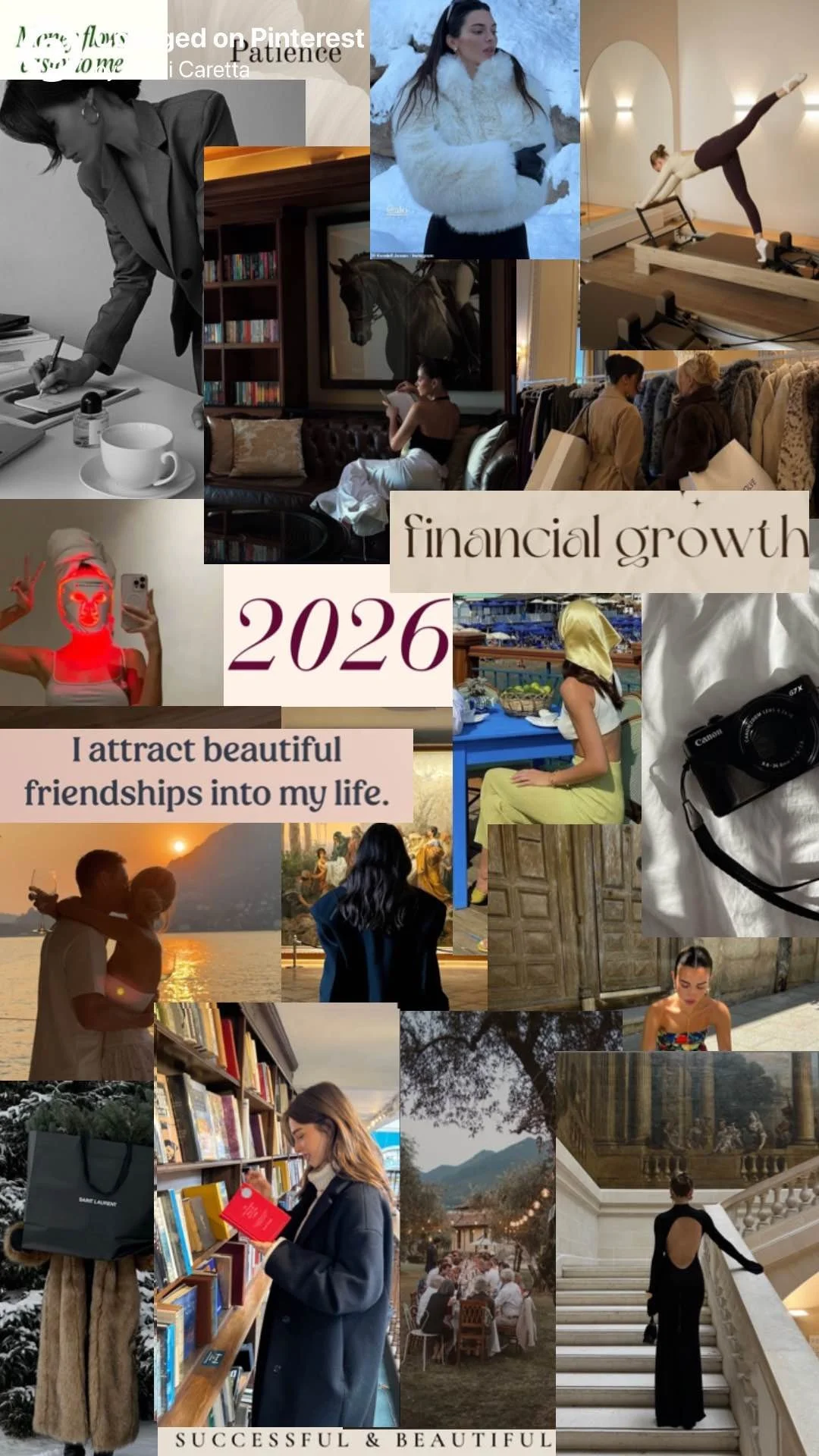
It marks the beginning of a new year, a moment when collective attention turns toward intention-setting, goal-making, and the familiar ritual of creating vision boards. It is a season filled with promises of a “new self,” often rushed into with lists, resolutions, and carefully curated images. For me, however, vision boards have never felt like a trend or a once-a-year exercise. They are a tool I have returned to consistently over the past few years, not to reinvent myself, but to observe myself more closely. Vision boards are often reduced to the language of manifestation: the idea that simply looking at an image will make it appear in one’s life. Yet this framing flattens what makes vision boards meaningful in the first place. At their core, they are not about predicting the future. They are about how we see. They function as tools of visual cognition, a way to organize thoughts, desires, and curiosities through images rather than words. Long before goals become clear sentences, they often exist as feelings: moods, atmospheres, fragments. Images allow those fragments to surface without forcing them into premature clarity. In this sense, a vision board becomes an exercise in attention. What we choose to collect, return to, and place side by side reveals where our focus naturally rests. Over time, patterns emerge, not because we “manifested” them, but because we learned to notice them. Perhaps most importantly, vision boards help externalize desires we do not yet have language for. They give form to what feels intuitive, unfinished, or still becoming. Instead of demanding answers, they hold space for recognition. Seen this way, vision boards are quieter and more honest than their popular reputation suggests. They are less about attraction and more about awareness, a visual practice of paying attention to what matters.
My personal relationship with vision boards
Over the past few years, vision boards have come to hold a particular sense of magic and excitement for me. I started making them in January 2024, relatively recently, during a period of personal difficulty, when I deeply wanted to enter the new year with a more positive mindset. At the time, they felt like a way to regain clarity: to set more concrete goals, re-center my values, and gently bring my life back into focus. Since then, I have continued building a vision board every year. The more I return to the practice, the more I believe in its quiet power. Vision boards have helped me mentally visualize my goals, values, and intentions, while also offering a space for creativity and play. There is something almost nostalgic about the process, the act of making collages, cutting images, and assembling fragments, a return to a childlike sense of curiosity and joy. While vision boards do not require a specific moment in time, for many people the beginning of the year naturally represents a fresh start. January offers a pause, an invitation to reflect and plan. I personally love creating my main vision board at the start of the year and often begin thinking about it as early as mid-December. That said, I also created a mid-year vision board during the fall as fall has always felt like another personal reset for me; a season of change, grounding, and renewed intention after the intensity of summer. I regularly check in with my vision boards throughout the year and sometimes create them for specific moments or themes. One example is my Galentine’s vision board, or my Guatemala or New York’s vision board which I love working on during specific seasons or moments. What I find most meaningful about vision boards is that their benefits go far beyond manifestation or “woo” culture. They are deeply connected to neuroscience, to the way our brains respond to mental imagery, visual repetition, and intentional focus. Through images and mental rehearsal, vision boards help reinforce goals and values in a way that feels both intuitive and grounded.
How I build my vision boards
Personally, I like to work with both a written vision board and a visual one. I always create a digital version, but I often love building a physical board using paper, magazines, and printed images. It may feel excessive to some, but for me it is part of the joy of the process. I usually begin with a written outline, dividing my vision board into seven key areas of my life. This structure is entirely flexible and can vary from person to person, but it helps me stay intentional and balanced. From there, I transition into a digital vision board, where I begin collecting images connected to each of these areas, things I want to achieve, experience, or embody. When selecting images, I am especially drawn to photographs that feel personal and familiar: moments that resemble my own life, my features, my style, or my surroundings. Often, I choose images that look as though they could have been taken of me, as if someone captured a quiet moment I have yet to live. This approach allows the vision board to feel less aspirational and more intimate, blurring the line between who I am now and who I am becoming.
Physical health
This includes movement, nutrition, skin and hair care, and overall well-being.
Career and finances
Here I focus on professional growth, career goals, financial stability, and long-term planning. I sometimes separate finances into their own category, noting how much I want to save, invest, or prioritize during the year.Relationships and family
This section includes romantic relationships, friendships, and family connections. I try to be as specific as possible, from how I want to show up for others to small, meaningful habits like calling family members regularly.Personal growth and spirituality
This area reflects inner development: reading, learning, self-reflection, and spiritual or religious practices I want to nurture.Home environment and location
Here I visualize where and how I want to live, my apartment, décor, surroundings, and even the city or environment I want to be immersed in.Hobbies and travel
This section captures creativity, leisure, and exploration. Travel, in particular, feels deeply therapeutic to me, and I try to plan at least one meaningful trip each year.Mental health and mindset
This focuses on emotional well-being, therapy, boundaries, and the mindset I want to cultivate throughout the year.
When working through these areas, I always begin with reflection. I ask myself what I want to carry forward from the past year, what worked, what felt aligned, and what I need to release. Vision boards, for me, are not only about adding more goals or expectations. They are equally about letting go of what drains energy, creates overwhelm, or no longer serves who I am becoming.
Vision Board Tips
Start with writing, not images.
Begin by noting down your goals, intentions, and feelings in a journal or on a simple piece of paper. Writing helps clarify what you are actually drawn to before visual influence takes over.Collect images that resonate with you.
Choose images that feel personal, things you want to achieve, places you want to visit, emotions you want to experience, or versions of yourself you recognize. Let intuition guide the selection.Create before you curate.
Save images freely at first, placing them in a folder without overthinking. Once you have enough material, select a smaller group of images that truly feel significant and aligned.Build your college intentionally.
Arrange your selected images into a digital collage using tools like Pinterest or Canva, or create a physical board if that feels more grounding. Focus on flow, mood, and cohesion rather than perfection.Revisit your vision board regularly.
A vision board is not a one-time ritual. Return to it monthly or every few months to reconnect with your intentions and notice what still resonates.Allow it to evolve.
Goals shift, desires change, and new priorities emerge. Add, remove, or replace images as needed, your vision board should reflect growth, not pressure.
The 2025 J.Crew & Ralph Lauren Christmas Aesthetic
This year’s Christmas and holiday aesthetic feels like a return to quiet classics, rich textures, cable knits, warm neutrals, and timeless styles. Everywhere, people are talking about the J.Crew and Ralph Lauren holiday look, from home décor and interior design to clothes: a blend of heritage, old money, and effortless elegance.
This year’s Christmas and holiday aesthetic feels like a return to quiet classics, rich textures, cable knits, warm neutrals, and timeless styles. Everywhere, people are talking about the J.Crew and Ralph Lauren holiday look, from home décor and interior design to clothes: a blend of heritage, old money, and effortless elegance. It’s a Christmas mood defined by plaid scarves, soft sweaters, deep greens, and cozy interiors, a season that feels familiar, nostalgic, and deeply comforting.
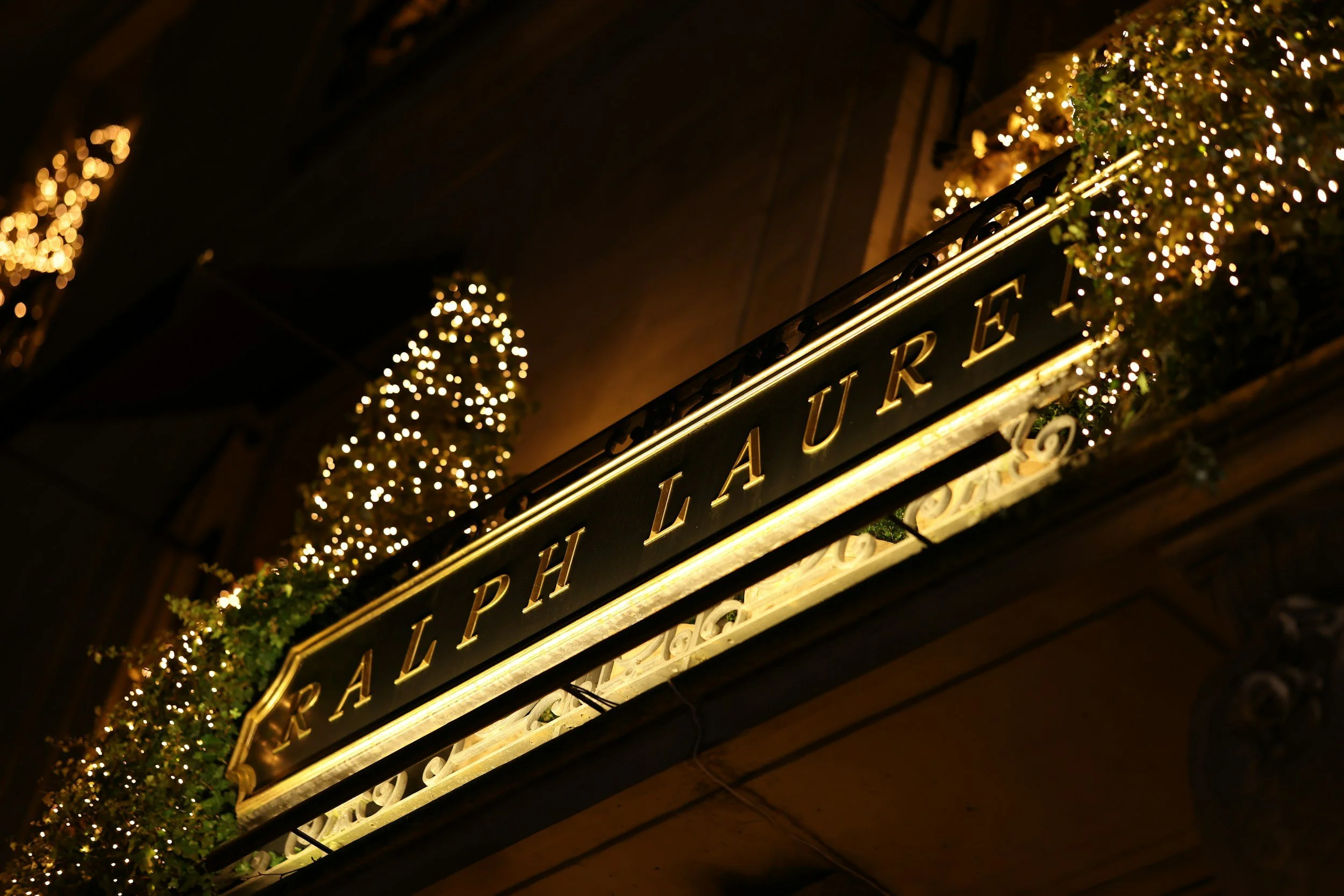
For a few weeks now, one of the major holiday aesthetics for 2025 has been dominated by Ralph Lauren’s holiday vision, often called “Ralph Lauren Christmas,” gaining virality both on Instagram and TikTok. It is a holiday style inspired by old-fashioned, classic Christmas scenes, and people cannot stop talking about it. It’s a warm and cozy Christmas full of inviting moments: families gathered around the fireplace, old books, and vintage holiday décor. Everything feels coordinated, from the decorations to the outfits everyone is wearing.
It is a holiday atmosphere that takes inspiration from Ralph Lauren ads, feeling both traditional and appealing. It draws from New York in the ’90s, representing a sense of nostalgia and comfort: deep green velvet, warm wood tones, plaid blankets, equestrian details, and fireplaces glowing in the background. It’s cinematic and timeless, capturing the feeling of coming home for the holidays. Every detail feels curated and warm, evoking heritage and sophistication.
On TikTok, the trend has millions of views, with people searching for Ralph Lauren–inspired home décor and clothing. Ralph Lauren focuses on colors such as green, red, black, and navy, with patterns like tartan. It gives a sense of old money and quiet luxury through timeless clothing and classic, vintage-inspired home pieces. What is most interesting is that today, anyone can bring this holiday style into their home without needing a big budget, just a cozy touch, plaid or velvet ribbons on the tree, warm wood tones, and vintage-inspired décor. Despite being everywhere on social media, this Ralph Lauren Christmas feels less like a trend and more like nostalgia, a call for a classic Christmas, a way of making your home cozier and your clothing more sophisticated.
Alongside the Ralph Lauren Christmas trend, another holiday aesthetic has been taking over social media this year, quieter and less viral, is the “J. Crew-inspired Christmas.” Unlike the formal, heritage-driven Ralph Lauren look, the J. Crew holiday mood is softer and more approachable: cozy knits, wool coats, navy stripes, warm neutrals, and that classic New England winter charm. Videos on Instagram and TikTok bring back a sense of nostalgia, almost like stepping inside a vintage J. Crew holiday catalog. They capture the feeling of a quiet December stroll through town, snow on the ground, simple wreaths on doors, pine garlands, friends laughing, chunky scarves, and timeless outfits that look effortless yet polished
Even though the internet hasn’t given this aesthetic an official name, creators on TikTok and Instagram keep sharing outfit ideas, color palettes, and home details that reflect J. Crew’s clean and comforting winter style. It’s a look that feels cozy, classic, and easy to recreate, something warm and familiar for the holiday season.
Both J.Crew and Ralph Lauren tap into a shared desire for calm, tradition, and comfort. After years of fast trends and constant changes, people are craving something steady, textures you can feel, colors that soothe, and classic pieces that don’t try too hard. This holiday season, quiet luxury mixes with cozy nostalgia.
This year’s holiday style feels like a soft reminder that simplicity, warmth, and nostalgia never go out of style. Whether you’re dressing up or staying home, the 2025 J.Crew and Ralph Lauren Christmas aesthetic brings comfort and beauty to the season, an old-money mood expressed in the quietest, coziest way.
🎄 How to Recreate the Ralph Lauren Christmas Look
Think: warm, traditional, old-money holiday charm.
✨ Style & Clothing
Deep green, red, navy, and black
Tartan scarves or coats
Velvet dresses or jackets
Cable-knit sweaters
Leather belts, boots, and equestrian details
White shirts layered under sweaters
Gold or pearl accessories
✨ Home Décor
Tartan blankets or throw pillows
Velvet bows on the tree
Candles and soft, warm lighting
Vintage-style ornaments
Wooden picture frames
Old books stacked on tables
Dark wood tones
Garland around windows or the fireplace
✨ Mood
Classic Christmas playlists
Fireplace (real or virtual)
A cozy, slightly nostalgic atmosphere